- BIST10011,597+1.46%
- USD49.55+0.21%
- EUR55.57-0.09%
- GOLD4,144.20-0.38%
- INTEREST37.00%-1.00
- BITCOIN81,424-0.51%
- October 20, 202621°
- BIST10011,597+1.46%
- USD49.55+0.21%
- EUR55.57-0.09%
- GOLD4,144.20-0.38%
- INTEREST37.00%-1.00
- BITCOIN81,424-0.51%
- October 20, 202621°
Hormuz Crisis Fails to Spark Coal Surge, Green Energy Attracts Investors
The energy crisis triggered by the closure of the Strait of Hormuz strengthened expectations of a coal comeback in some countries, but global coal consumption did not spike in the initial months. Meanwhile, renewable energy became more attractive to investors due to its independence from fuel supply.
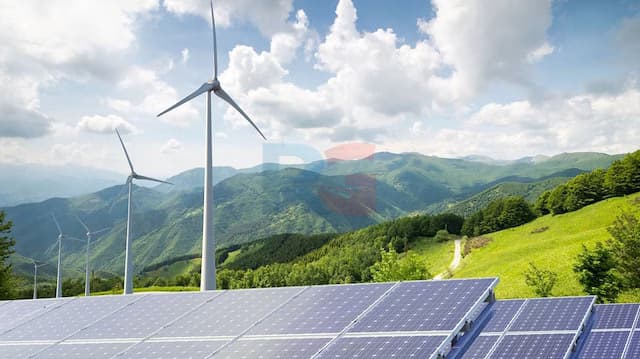
The energy crisis deepened by the closure of the Strait of Hormuz emerged as one of the biggest challenges hindering the transition to renewable energy. Concerns arose that coal consumption would increase with rising oil prices, yet the expected surge in global coal use did not materialize in the crisis's early months.
During this period, green energy became more appealing to investors. The fact that solar, wind, and hydroelectric plants do not require fuel supply to operate strengthened the advantage of these sources amid uncertainty.
Shortened Workweek and Remote Work Spread in Asia
Following the war in Iran, shipments of about one-fifth of the global sea-transported oil and liquefied natural gas passing through the Strait of Hormuz were disrupted. Asia felt the heaviest impact, prompting some governments to shorten the workweek to save fuel, implement remote work arrangements, and temporarily shift schools to remote education.
There was also a short-term risk of slowing down the energy transition. Some countries turned to replacing part of gas-fired electricity generation with more polluting coal, as coal shipments generally do not pass through Hormuz.
The conflict's effects were not limited to fossil fuels. Aluminum supply used in solar panels was also disrupted, inflation accelerated, and some fossil fuel producers increased production to benefit from high prices.
Coal Phase-Out Timelines Reconsidered in Europe
The crisis's reverberations were felt in Europe as well, though the continent was less affected compared to Asia. Italy's parliament postponed the coal phase-out date to 2038. Coal accounts for about 1.5% of the country's electricity production.
In Germany, Chancellor Friedrich Merz did not rule out operating some coal plants longer than planned. However, the country's goal to completely abandon coal by 2038 remains unchallenged. Coal constitutes about one-fifth of Germany's electricity generation.
Globally, the picture appears less disruptive. In March and April 2026, coal-fired electricity production worldwide increased by only 1% compared to the same period the previous year. In those months, electricity generated from wind and solar surpassed gas for the first time in history.
Gas-fired electricity production remained at last year's levels, while wind and solar output rose by about 8%. These figures indicate that despite short-term crises, the energy transition has not fundamentally changed direction.
International Energy Agency's Expectations Remain Intact
In a report published last year, the International Energy Agency predicted that coal demand would peak before the end of this decade even if current energy policies remain unchanged. According to the agency's calculations, if countries implement their announced energy policies, oil demand could decline after 2030 and natural gas demand after 2035.
Recent developments have not weakened these expectations but rather suggest that fossil fuels will continue to face pressure in the medium and long term. While the crisis brought temporary coal use to the forefront, it also increased the strategic importance of renewable resources.
Santa Marta Meeting Highlights Global Divisions
At the end of April, the first global conference addressing fossil fuel phase-out was held in Santa Marta, Colombia. Fifty-seven countries participated; however, China, the US, India, and Russia—responsible for more than half of global greenhouse gas emissions in 2024—were neither invited nor present.
These countries are also among the world's largest fossil fuel producers and consumers. Nevertheless, the participating countries hold significant weight in global energy policy, collectively accounting for over a quarter of the world's oil consumption, more than a fifth of gas consumption, and about a tenth of coal consumption.
Among the participants were the United Kingdom and some of the European Union's largest economies. Important fossil fuel producers such as Canada, Norway, Brazil, and Nigeria were also represented.
Before the conference, around 400 scientists from different regions worked on a document outlining how to manage the fossil fuel phase-out. The document recommended supporting and retraining workers in the fossil fuel sector during the transition, halting new coal and oil-gas infrastructure projects, and ending fossil fuel subsidies.
The text also proposed financing the green energy transition through fossil fuel taxes or similar levies. It emphasized involving local communities in planning, compensating the Global South for damages caused by past emissions from the Global North, debt relief, and expanding international climate finance and technology transfer.
The role of the Global South was particularly highlighted. These countries host 78% of the world's fossil fuel reserves, making coal, oil, and gas extraction still a strong economic option for them.
Latin America Leads in Energy Transition
The Santa Marta conference was organized by Colombia and the Netherlands. Colombia ranks 13th globally in coal production and 5th in coal exports. Despite this, the share of fossil fuels in the country's economy is declining.
Fossil fuels make up about 35% of Colombia's exports and roughly 10% of public revenues. However, production in the main coal region, La Guajira, peaked in 2012. Buyers from Chile to the European Union have also started moving away from coal.
Efforts to redirect Colombian coal to Asian markets are limited due to high transportation costs. Without new reserves, oil production is expected to end in about 30 years, and gas reserves could be depleted in as little as 6.5 years.
Hydroelectric plants form the backbone of electricity generation in Colombia. Since 2000, hydroelectricity's share has mostly ranged between 50% and 80%. The share of solar and wind in electricity production rose from zero to 5% in less than five years.
Although Latin America often remains in the background in energy sector discussions, some countries in the region are demonstrating remarkable transformation. Uruguay, which suffered frequent power outages just over a decade ago, is now cited as a model in energy transition.
The overall picture in the region shows that the Global South can be not only a spectator but also a leading actor in certain areas of the energy transition. The Santa Marta meeting clearly revealed this divide.
Climate Fight Becomes a Legal Obligation
Another notable topic in the article is the strengthening legal framework in the fight against the climate crisis. United Nations decisions and increasing international meetings mark a period where states' obligations to protect the environment from greenhouse gas emissions are more clearly defined.
This framework brings discussions that will shape the future direction of energy consumption to the forefront. Although short-term pressure to revert to fossil fuels may increase, the political, economic, and legal foundations supporting the transition to renewable energy are strengthening in the long term.
When read together, the Hormuz crisis, the Santa Marta meeting, and global data lead to a single conclusion: the energy transition may slow down but does not appear to have lost its course. While crises temporarily highlight fossil fuels, investors' and governments' focus is increasingly shifting toward clean energy.
Stay Updated with RuskiGazeta
Subscribe to be informed about special news, developments and announcements. We will keep you informed.
By signing up, you agree to our Privacy Policy