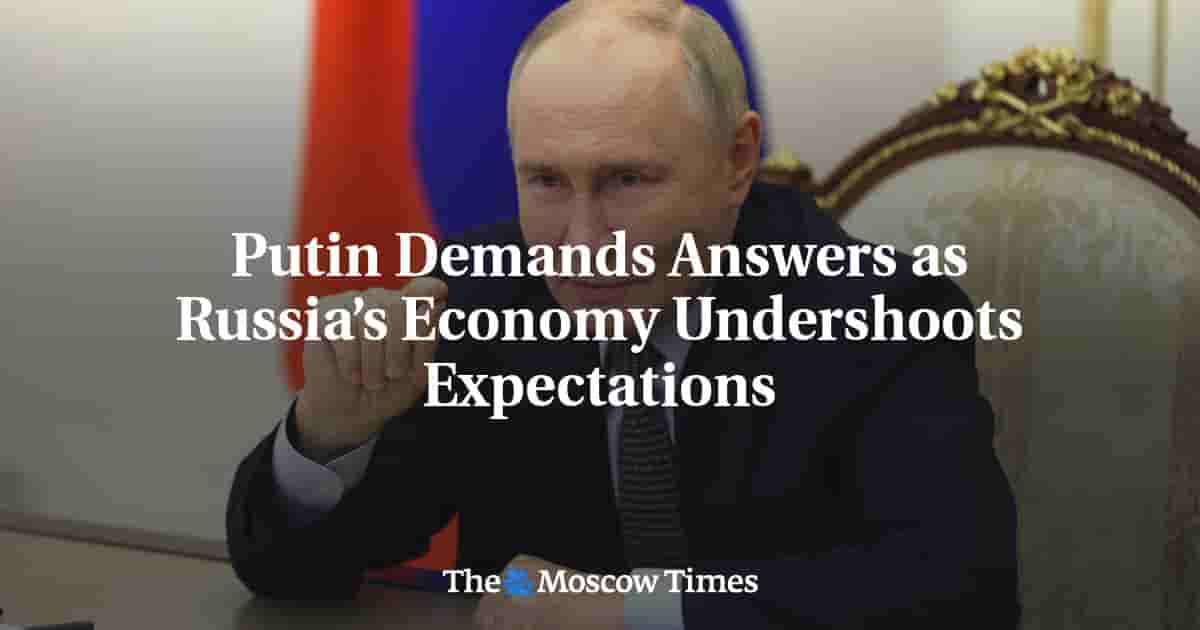
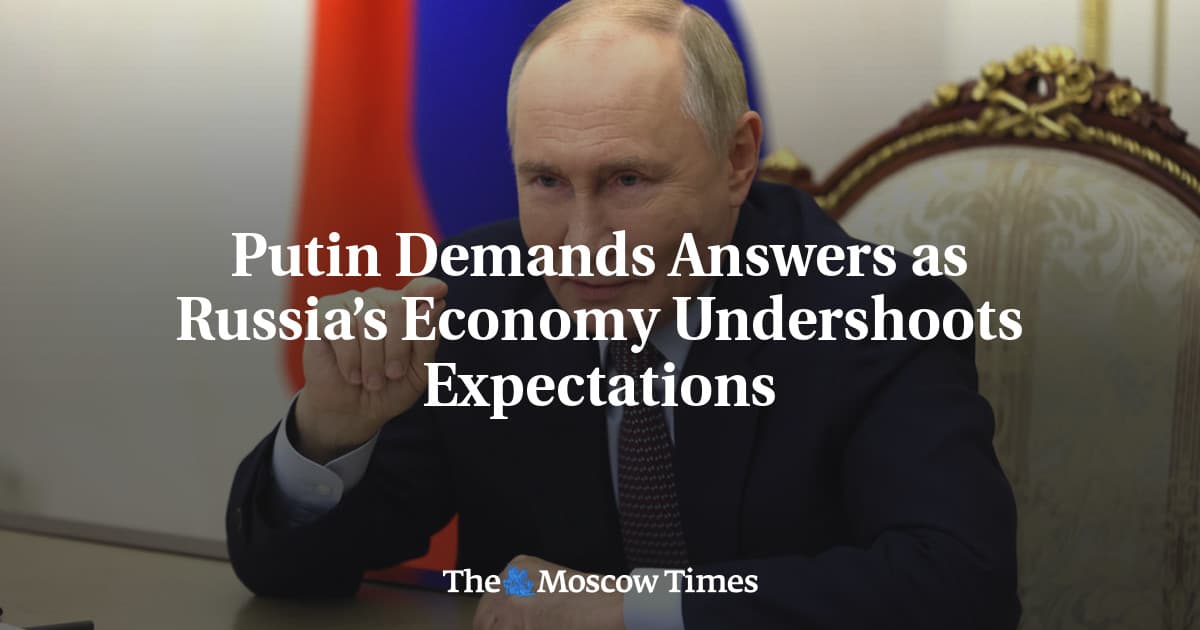
Vladimir Putin, in his speech at the general session of the St. Petersburg International Economic Forum, described the pressures facing the Russian economy without concealing them but also without deepening them directly. This year’s forum stood out for its more cautious tone compared to the usual optimism.
The speech was delivered during a period when Russia’s budget is running a deficit, large companies are struggling under high interest rates, and small businesses are squeezed by increasing taxes, creating a different context for Putin. Unlike previous years when he emphasized growth, this time the Russian leader shifted his rhetoric towards the economic success of BRICS countries.
Putin briefly responded to criticisms about the difficulties in the Russian economy by comparing it to European countries. However, the speech did not present concrete steps to truly revive the economy or clear guidance that the business community is eager for.
No Clear Message on Interest Rates and Sanctions
One of the most critical issues for the business community, the future of the policy interest rate, was not clearly addressed. Due to the Kremlin’s war plans directly shaping the sanctions regime, no new framework was introduced on this matter either.
The only concrete promise made in the speech was that the annual revenue threshold for companies to benefit from preferential tax regimes will not be lowered for now. This threshold currently stands at 20 million rubles.
Last year, companies with revenues up to 60 million rubles could benefit from this relief. The government had previously planned to reduce this limit to 10 million rubles, but Putin requested that this plan be suspended.
On the surface, this decision appears to support the business community, but the sharp reduction from 60 million to 20 million rubles had already put some companies in a difficult position. Therefore, the main function of the announcement is interpreted as calming companies ahead of the elections.
St. Petersburg Attacks Ignored
Putin did not mention the attacks on St. Petersburg during the forum’s early days. The speech gave the impression that the security tensions in the city were being ignored.
The gap between the optimistic economic picture traditionally presented at forums and the real problems was felt more sharply this year. Instead of providing a clear path to reduce uncertainty, the business community was once again offered controlled optimism.
Military Emphasis in United Russia Candidate Lists
The text also describes United Russia’s primary election process ahead of the State Duma elections. In this process, where results are largely predetermined, the main goal is less about selecting the strongest candidates and more about starting the campaign early and testing administrative mobilization.
This time, the Kremlin’s political team is said to emphasize soldiers. According to various estimates, 50 to 60 "special military operation participants" may be on the party lists. This number falls short of the approximately 100-person plan initially targeted by the Presidential Administration.
It is recalled that Putin previously described soldiers who fought in Ukraine as the "new elite" and wanted their rapid advancement. Governors and Presidential Administration officials are also trying to demonstrate this message on the ground through various appointments.
However, most of these appointments are said to be symbolic, with soldiers generally placed in financial or non-decision-making roles. They are mostly assigned to patriotic education, regional security, and working with other veterans.
The State Duma seat is also seen as a suitable area within this framework, but personal influence remains limited due to strict party discipline. The political team is reported to be able to report that a few dozen names with a "veteran" appearance have been moved to the federal parliament.
On the other hand, some of these individuals are already part of elite circles, selected from among deputies, local officials, and bureaucrats. Examples include travel blogger Bogdan Bulychev in Magadan and businessman Anton Moroz in Pskov, who won primaries labeled as "SVO participants." However, their connection to the war is considered quite weak.
Among actual military personnel, senior officers stand out, while the number of privates and junior officers remains limited. It is assessed that the system tries to prevent the formation of a possible "veteran faction" by selecting experienced and compliant individuals.
Voter turnout in the primaries was also below Kremlin expectations. Despite a targeted turnout of about 10%, it remained at 9%, with some regions experiencing nearly a 50% drop compared to previous campaigns.
Despite this, the turnout was partially balanced by regions known as "election sultanates," where participation ranged between 15% and 20%. Still, the text concludes that the administrative machinery is not as effective as before, with income loss and layoffs playing a role in this weakening.
Expectations for Elites’ Children Not Met
Another notable topic of the forum was the public visibility of the children of Russian elites. Since the war began, their presence on panels had led to interpretations that the second generation was being brought to the forefront.
However, after three years, this theory has not been confirmed. It is stated that Katerina Tikhonova, Maria Vorontsova, Aleksandr Vaino, Vladimir Kiriyenko, Roman Rotenberg, and Boris Kovalchuk have not experienced significant career leaps.
The text notes that despite some strong family ties, these individuals remain in their previous positions. Aleksandr Vaino’s role at the Strategic Initiatives Agency and Roman Rotenberg’s position are seen as limited compared to their family backgrounds.