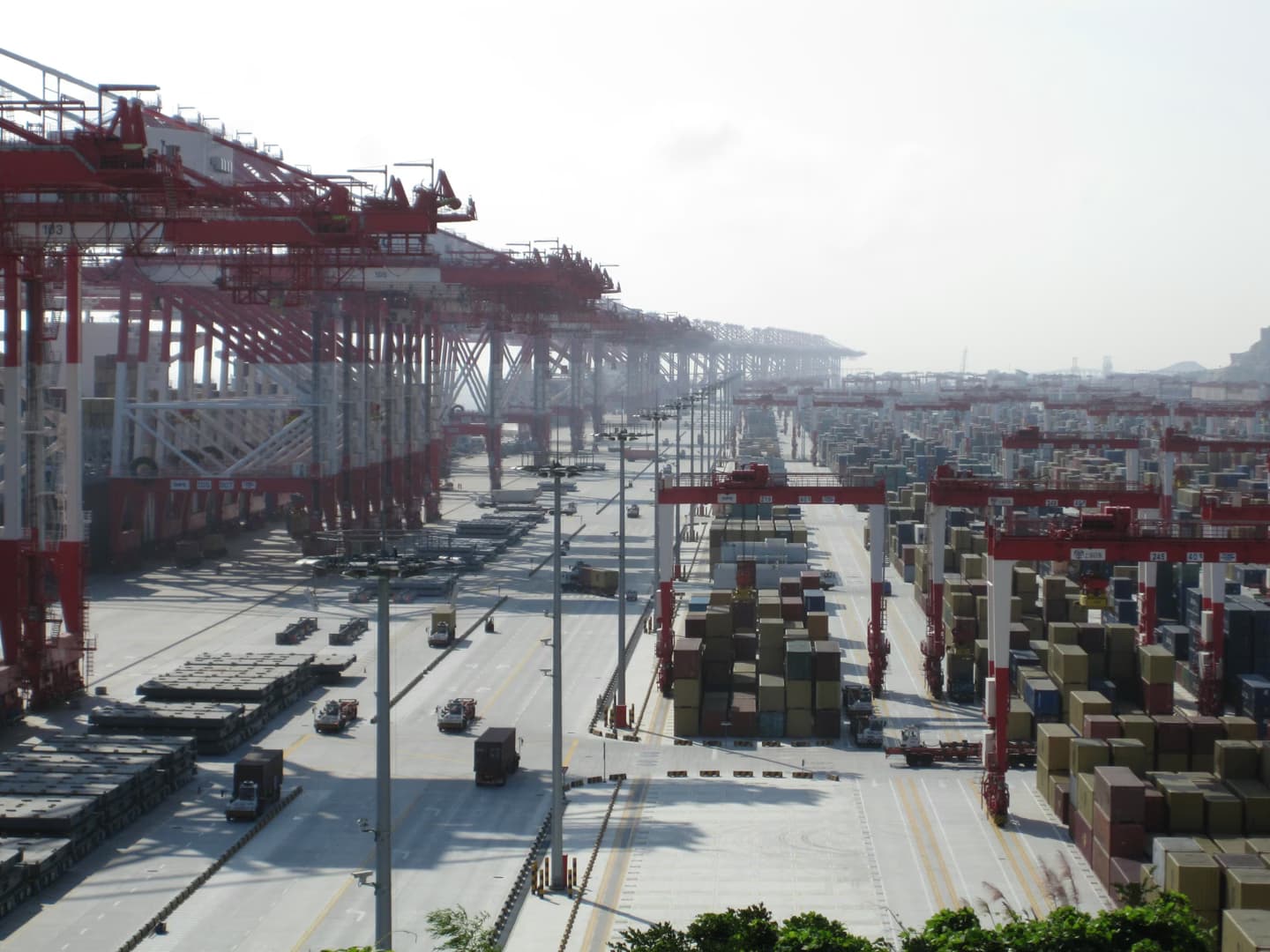
Russia's sea ports continued to increase cargo handling volumes in the first half of 2026 despite Western sanctions. According to data released by the Association of Russian Sea Commercial Ports (ASOP), total cargo turnover in the January-June period reached 451.5 million tons, recording a 5.8% growth compared to the same period last year.
Dry cargo handling volume increased by 9.1% to 224.3 million tons, while container cargo reached 103.7% of last year's level. Container handling in TEU terms rose by 102.6% to 2,784,554 units.
In liquid cargo, total volume rose by 2.8% to 227.1 million tons. Within this category, increases were seen in liquefied gas, oil, and food cargoes, while declines occurred in chemical and petroleum products.
Total export cargo increased by 5.7% to 354.7 million tons. Import cargo rose by 1.7% to 21.3 million tons. Transit cargo decreased by 6.1% to 34.2 million tons, while cabotage cargo saw a strong increase of 22.3% to 41.3 million tons.
By sea basin, the highest growth occurred in the Caspian basin, where cargo turnover increased by 59.7% to 5.3 million tons. The Arctic basin rose by 15% to 51.2 million tons, the Far East basin by 11.8% to 132.7 million tons, and the Azov-Black Sea basin by 6.3% to 132 million tons. In the Baltic basin, cargo turnover decreased by 4.2% to 130.3 million tons.
ASOP, which brings together 76 organizations and enterprises from Russia's maritime transport sector, aims to coordinate the effective development of maritime transport enterprises and the realization of Russia's transport potential.