- BIST10011,722-2.89%
- USD49.42+0.06%
- EUR55.41+0.20%
- GOLD4,178.40+0.20%
- INTEREST37.00%-1.00
- BITCOIN81,293-1.02%
- October 16, 202612°
- BIST10011,722-2.89%
- USD49.42+0.06%
- EUR55.41+0.20%
- GOLD4,178.40+0.20%
- INTEREST37.00%-1.00
- BITCOIN81,293-1.02%
- October 16, 202612°
Türkiye joins 11 countries capable of producing communications satellites and unveils Moon goal
Minister of Industry and Technology Mehmet Fatih Kacır outlined Türkiye’s goals for satellites, rockets, a spaceport, a technopark and the Moon at the 77th International Astronautical Congress in Antalya. The congress also presented the space plans of the United Arab Emirates, Poland, Uzbekistan and Spain.
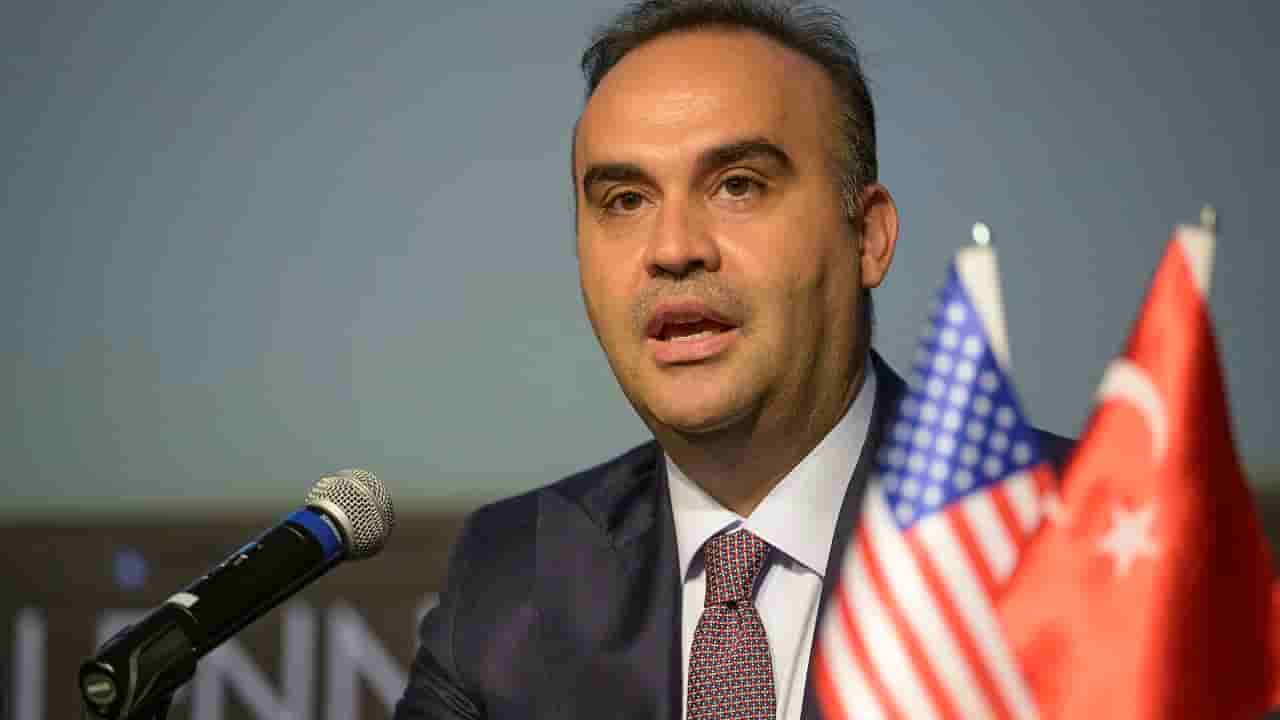
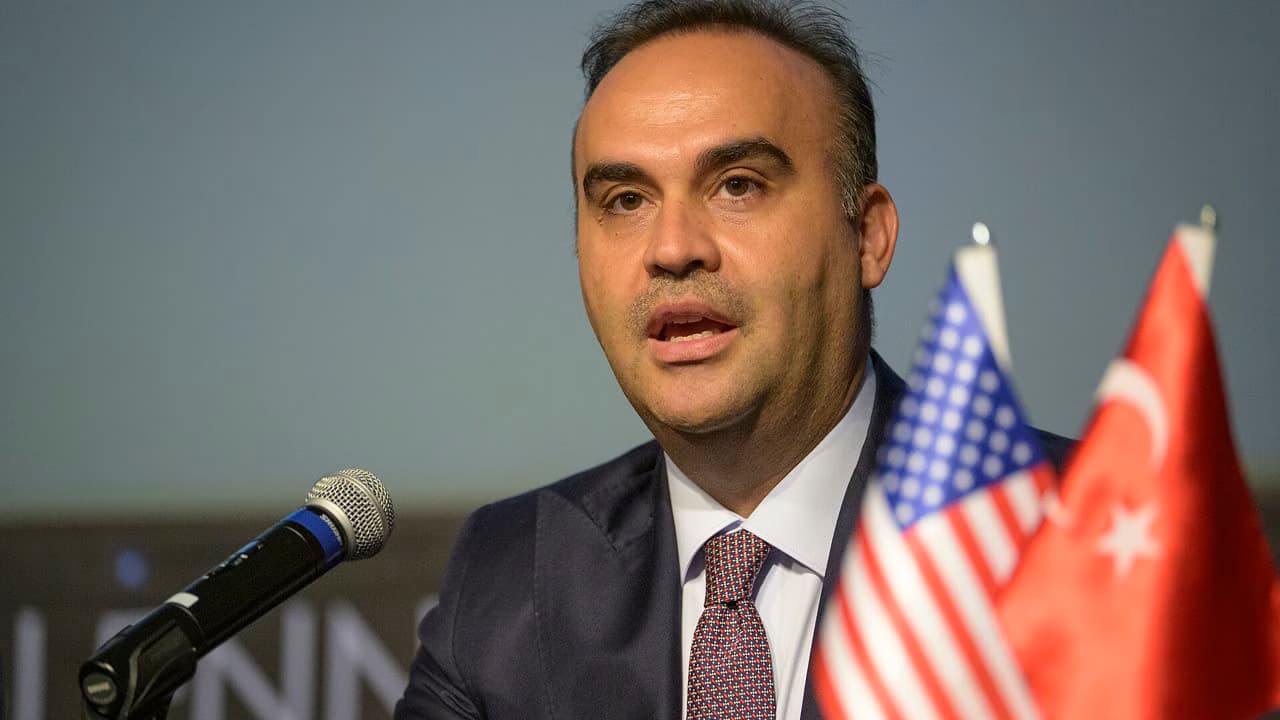
Türkiye’s goals in space were discussed at the ministerial roundtable titled "Space: A national strategic priority?" held as part of the 77th International Astronautical Congress in Antalya. The congress is being held at the Antalya NEST Congress Center under the coordination of the Ministry of Industry and Technology, with the support of the Turkish Space Agency and SAHA Istanbul.
Minister of Industry and Technology Mehmet Fatih Kacır said the technological gains Türkiye has achieved in the aviation and space industries are recognized worldwide. Kacır said this success had been made possible by focusing on paradigm shifts and contributing to efforts with partners to transform the space sector.
Noting that the 2026 International Astronautical Congress is the world’s largest space event, Kacır said Türkiye exports more than $283 billion in goods and more than $120 billion in services annually. The minister said investments in high technology could increase the production of high-value-added products and services.
Kacır said Türkiye had made major investments in space science and technologies in recent years and announced the launch of a domestic satellite production program. Saying that the program initially focused on Earth observation satellites, Kacır reported that the high-resolution İMECE observation satellite, launched in 2023, was produced with more than 85% domestic contribution.
Kacır said that with the launch of Türksat 6A, Türkiye had joined the 11 countries capable of designing, developing and manufacturing their own communications satellites. Saying that reaching the Moon was one of Türkiye’s main priorities, Kacır announced that a major space technopark would be established in Ankara and said a spaceport was being built in Somalia to enable Türkiye to reach space with its own rockets.
Kacır also said Türkiye has a carrier rocket development program and noted that the space launch sector was undergoing a rapid paradigm shift. He said that Türkiye could achieve faster success by focusing on these changes, as it had done in the defense industry.
Kacır said the congress brought people from different parts of the world together to exchange ideas, establish partnerships and make plans for the future. He added that more than 1 million young people take part every year in TEKNOFEST, which has been held in Türkiye for nine years. Kacır said young people compete in high technology, rockets, satellites, unmanned aerial vehicles and robotics.
United Arab Emirates targets a place among the top 10 space economies
United Arab Emirates Minister of Sports and President of the Space Agency Ahmed Belhoul Al Falasi said their institutions were 10-year-old organizations and needed to focus on the commercial dimension in the coming period. Describing cooperation between the public and private sectors as one of the fundamental conditions for success in space, Falasi emphasized the importance of this partnership.
Falasi announced that, under the United Arab Emirates’ National Space Strategy, the country aims to double revenues from commercial space activities by 2031 and become one of the world’s top 10 space economies. The strategy includes attracting global ventures to the country, improving access to financing and markets, and developing space infrastructure and a skilled workforce.
Poland calls for greater cooperation in space
Michal Jarosz, secretary of state at Poland’s Ministry of Development and Technology, said next year’s event would be held in Poland. Saying that space was vital for security and the economy, Jarosz noted that satellites support navigation, transportation, communications, agriculture and crisis management.
Jarosz said no country could meet all its needs in space on its own and that cooperation and international capabilities needed to complement one another. He said greater cooperation was needed to keep space open to safe, sustainable and peaceful activities for future generations.
Uzbekistan prepares for the 2028 congress
Uzbekistan’s Minister of Digital Technologies Sherzod Shermatov said space had been a national priority for his country six centuries ago as well. Saying they wanted to bring this priority back to Samarkand, Shermatov announced that preparations were under way to launch a satellite and send young astronauts into space ahead of the congress, which Uzbekistan will host in 2028.
Spain’s Secretary of State for Science, Innovation and Universities Juan Cruz Cigudosa said his country’s space sector had recorded significant growth between 2022 and 2025. Cigudosa said the turnover of Spanish space companies had increased by 40% to reach €1.5 billion annually, while employment in the sector had risen by 52%.
Cigudosa said Spain would contribute €1.55 billion to the European Space Agency between 2026 and 2030, noting that this was three times its annual contribution a decade ago. Spain has submitted its candidacy to host the 80th International Astronautical Congress in Barcelona in 2029, with a focus on sustainable development, climate resilience and water resources.
Stay Updated with RuskiGazeta
Subscribe to be informed about special news, developments and announcements. We will keep you informed.
By signing up, you agree to our Privacy Policy