The meeting between U.S. Secretary of State Marco Rubio and his Russian counterpart Sergey Lavrov in Manila took place under the shadow of reports about Moscow's possible role in Iran's attacks on U.S. targets in the Middle East. Although the official agenda of the meeting was the Ukraine war, U.S. intelligence is investigating whether Russian support lies behind the precision of Iran's drone strikes on CIA facilities in Saudi Arabia.
Reuters news agency announced the investigation in a report published on Wednesday. The report noted that the effectiveness of the attacks could indicate possible external support. Earlier, CNN, citing U.S. intelligence sources, suggested that Moscow helped Tehran locate U.S. personnel and aircraft in the Gulf.
The Washington Post also reported on March 3, citing two sources, that a CIA station located at the U.S. Embassy in Riyadh was targeted. Reports that Iran targeted CIA facilities emerged in the early days of the war launched by the U.S. and Israel against Iran.
Expert: 'Russia's role is a realistic theory'
Nicole Grajewski, an assistant professor at Sciences Po University in Paris, told Al Jazeera that the theory of Russia's involvement in Iran's targeting process is 'realistic.' Grajewski said, 'Most of the attacks Iran carried out were far more advanced than what they had done before. That's why such support was suspected.'
Grajewski emphasized that Iran, unlike Russia, lacks advanced space-based reconnaissance capabilities, stating, 'Iran does not have enough military satellites for basic needs... It seems likely they have made some kind of deal with the Russians.' However, she added that Iran also has its own human intelligence networks in the region, which are often overlooked.
Moscow-Tehran military cooperation deepens
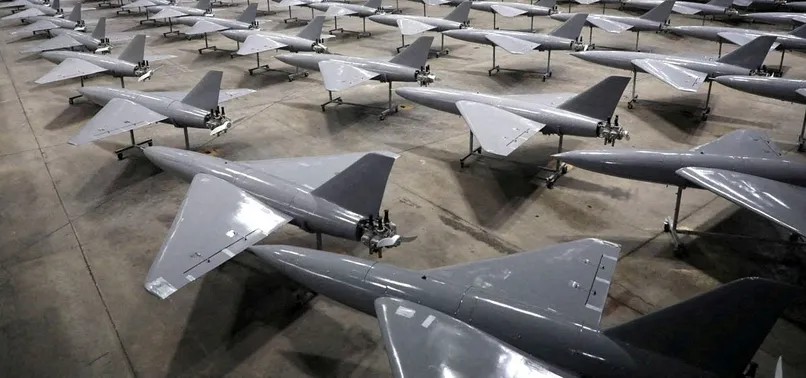
Amid the Ukraine war and Western sanctions, military ties between Moscow and Tehran are strengthening. After Russia invaded Ukraine in February 2022, Iran provided Moscow with critical weapons, particularly Shahed drones and Fateh-110 ballistic missiles, bringing the two sides closer. The 20-year Comprehensive Strategic Partnership Agreement signed last year also pledged to increase defense cooperation.
However, according to a report by the Moscow Times, Russian Deputy Foreign Minister Andrey Rudenko said the agreement 'does not mean a military alliance or mutual military assistance with Iran.' It was also claimed that Russia provided the Kometa-M anti-jamming navigation system to improve the accuracy of Iran's Shahed-136 drones. In March, it was reported that this Russian system was found in the wreckage of Iran's failed attack on a British Royal Air Force base in Cyprus. Russia, however, dismissed the Wall Street Journal's report on the matter as 'fake news.'
Grajewski disagreed with views that the relationship between the two countries is a 'marriage of convenience' against the West rather than an alliance, saying, 'Both see themselves as actors facing similar threats on the global stage, and their cooperation has intensified since the Ukraine war, especially recently.'
Ultimately, Iran's own capabilities are decisive
Mutual attacks between the U.S. and Iran have intensified in recent days. As U.S. airstrikes on Iran entered their 12th night, at least two people were killed in an attack on the Shalamcheh border crossing with Iraq on Thursday morning. Iran has also launched numerous retaliatory strikes on Gulf countries and Jordan in recent days.
Grajewski said that ultimately, Iran's own tactics are more decisive for the course of the war than Russian intelligence support. 'Russian intervention is not a fundamental turning point for Iran. Iran already had these capabilities; it had developed a comprehensive drone force and missile force,' Grajewski said, adding, 'What this support did was give Iran an advantage and enhance it.'