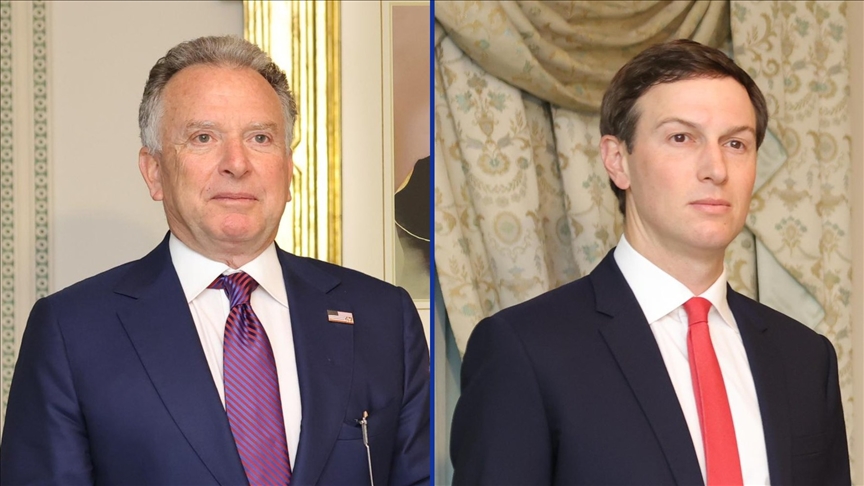
At a time when diplomatic contacts between Russia and the United States have returned to the agenda, Sergey Lavrov announced that Vladimir Putin was ready to receive Steve Witkoff and Jared Kushner if they came to Russia. The Russian foreign minister said Moscow was not rejecting a meeting with the two men and that Putin could receive them again, as he had before.
Lavrov said the proposals Witkoff and Kushner would bring were important. According to the minister, Witkoff and Kushner have earned the trust of US President Donald Trump and are in a position to influence him. Lavrov said Witkoff had conveyed Trump’s proposals to Moscow during his previous visit and that Putin had taken them into consideration.
Washington expected to respond on attacks
Lavrov said Putin had declared his readiness to accept the proposals conveyed by Washington at the meeting in Alaska as they were presented, despite some issues requiring compromise. The Russian minister said there was then a period of waiting and that the United States imposed sanctions on Lukoil and Rosneft.
Lavrov said Moscow had directed questions to the US Department of State about the intelligence support provided to Ukraine and the extent to which the United States was involved in planning and carrying out attacks on Russian territory. He said they were awaiting answers to those questions. He also said Moscow would not issue an ultimatum to Washington before possible talks with Witkoff and Kushner.
The conflict in Ukraine and Europe’s approach
Lavrov said Russia would not use methods that it attributes to Ukraine, and said Russian methods targeting Western support for Kyiv’s military capabilities would be toughened. The minister argued that calls for an immediate halt to the fighting ignored the need for a long-term and lasting solution.
Lavrov described a halt to the fighting along the current line of contact as unacceptable to Moscow and linked this approach to the Russian leadership’s understanding of its historical responsibility. He also claimed that European Union and NATO officials had traveled to Washington with Ukrainian President Volodymyr Zelenskyy and tried to persuade Donald Trump to abandon efforts to pursue a solution.
Plans to inspect Russian commercial vessels
Assessing the European Union’s plans to inspect Russian commercial vessels, Lavrov said the term “shadow fleet” did not appear in international documents. He argued that the term was being used to restrict Russia’s ability to sell its energy resources on world markets.
Lavrov said Moscow would consider any possible steps to stop and search the vessels, seize their cargoes or transfer the proceeds from selling those cargoes to Ukraine illegal. He said Russia would respond to such initiatives and that Russia would decide which vessels would be targeted in its response.
Japan’s policy toward Russia
Commenting on Russia’s position in Japan’s military doctrine, Lavrov described former Japanese Prime Minister Shinzo Abe as an “extremely decent” politician who understood that national interests could not be protected without cooperation with Russia. He claimed that the current Japanese administration was pursuing a policy based on the United States and the militarization of the country.
Lavrov recounted that Japan’s relevant minister greeted him and shook his hand during ASEAN events in the Philippines before returning to his place. He said the Japanese side later presented the brief contact as a meeting about bilateral relations and the regional situation.
The Russian minister also said that a delegation of Japanese businesspeople had told him during a visit to Russia that the Tokyo administration had instructed them not to discuss projects with the Russian side.
Assessments of Germany and Serbia
Speaking about Germany, Lavrov said he considered it unacceptable that a German journalist had asked at a press conference with the presidents of Serbia and Ukraine how Germany could help Ukraine. The minister also criticized German Chancellor Friedrich Merz, who has argued that Germany should become Europe’s leading military power.
Lavrov claimed that Serbian President Aleksandar Vucic was acting under difficult conditions because of his goal of European integration and that Brussels was exerting significant pressure on Belgrade. He said the pressure included demands to recognize Kosovo’s independence and join the European Union’s policy toward Russia.
Lavrov said Russia was supplying Serbia with natural gas at favorable prices and that it was important to Moscow for Belgrade not to participate in arming Ukraine. He said Vucic had previously made a specific decision in this regard and suggested that the Serbian president’s agreement to meet with Zelenskyy could be linked to a desire to ease pressure from the European Union.
Bulgaria’s possible position
Assessing Bulgaria’s possible involvement in the conflict in Ukraine and the “coalition of the willing,” Lavrov recalled that Bulgarian Prime Minister Rumen Radev had entered the elections with a pledge to protect national interests.
Lavrov said politicians who come to power with similar promises may later adopt different positions. He said the future of relations within the European Union was a matter for the European countries themselves.