- BIST10010,760-3.63%
- USD49.86+0.15%
- EUR55.82+0.52%
- GOLD3,898.90-3.29%
- INTEREST36.00%-1.00
- BITCOIN77,387+0.24%
- November 1, 202614°
- BIST10010,760-3.63%
- USD49.86+0.15%
- EUR55.82+0.52%
- GOLD3,898.90-3.29%
- INTEREST36.00%-1.00
- BITCOIN77,387+0.24%
- November 1, 202614°
Global Rights Compliance links North Korean workers in Russia to war production
Global Rights Compliance alleged that North Korean workers sent to Russia were employed under exploitative conditions and that some were used in factories producing for the war effort against Ukraine. The report said workers were forced to work 12-hour shifts and take only two days off per month, while intermediaries were paid up to 150,000 rubles per person.


The Hague-based Global Rights Compliance published a report examining the working conditions of workers sent from North Korea to Russia and the support provided by some production facilities to the war effort against Ukraine. Global Rights Compliance alleged that the workers were employed under exploitative conditions at facilities that included a factory producing military supplies.
Global Rights Compliance said a network of intermediaries run by a Russian businessman directed North Korean workers to Russian employers. The workers were brought to Russia on student visas to evade United Nations sanctions, after being given the impression that they would enroll at universities, and were later assigned to employers under contracts.
Global Rights Compliance said its intermediaries received commissions of up to 150,000 rubles for each worker. The report also alleged that the North Korean authorities took most of the workers' earnings and that the employees were kept in Russia under threat of reprisals.
Long shifts and threats of reprisals
The report alleged that employers forced North Korean workers to remain in their jobs and threatened reprisals against their families. Some job advertisements also guaranteed that the workers would not flee their jobs.
Global Rights Compliance said its assessment of job advertisements found that workers worked 12-hour shifts and took only two days off per month. During its research, the group used open-source intelligence and facial-recognition technology; its researchers also conducted fieldwork while posing as potential employers.
Elise Lauriot Prevost, the group's legal adviser, said the findings showed a dangerous convergence between Pyongyang's financing of its weapons programs through forced labor and Moscow's search for workers to sustain its war economy.
Two Russian nationals linked to the network contacted
Global Rights Compliance contacted two Russian nationals identified as playing key roles in the network of intermediaries. One of them denied the allegations. No statement was made on whether the other person responded.
Russia's Foreign Ministry and North Korea's embassy in Moscow did not respond to requests for comment.
UN resolution and Russia-North Korea ties
The United Nations Security Council adopted a resolution banning North Korean nationals from working abroad after the country's sixth and final nuclear test in 2017. Russia and China voted for the resolution as permanent members of the Security Council.
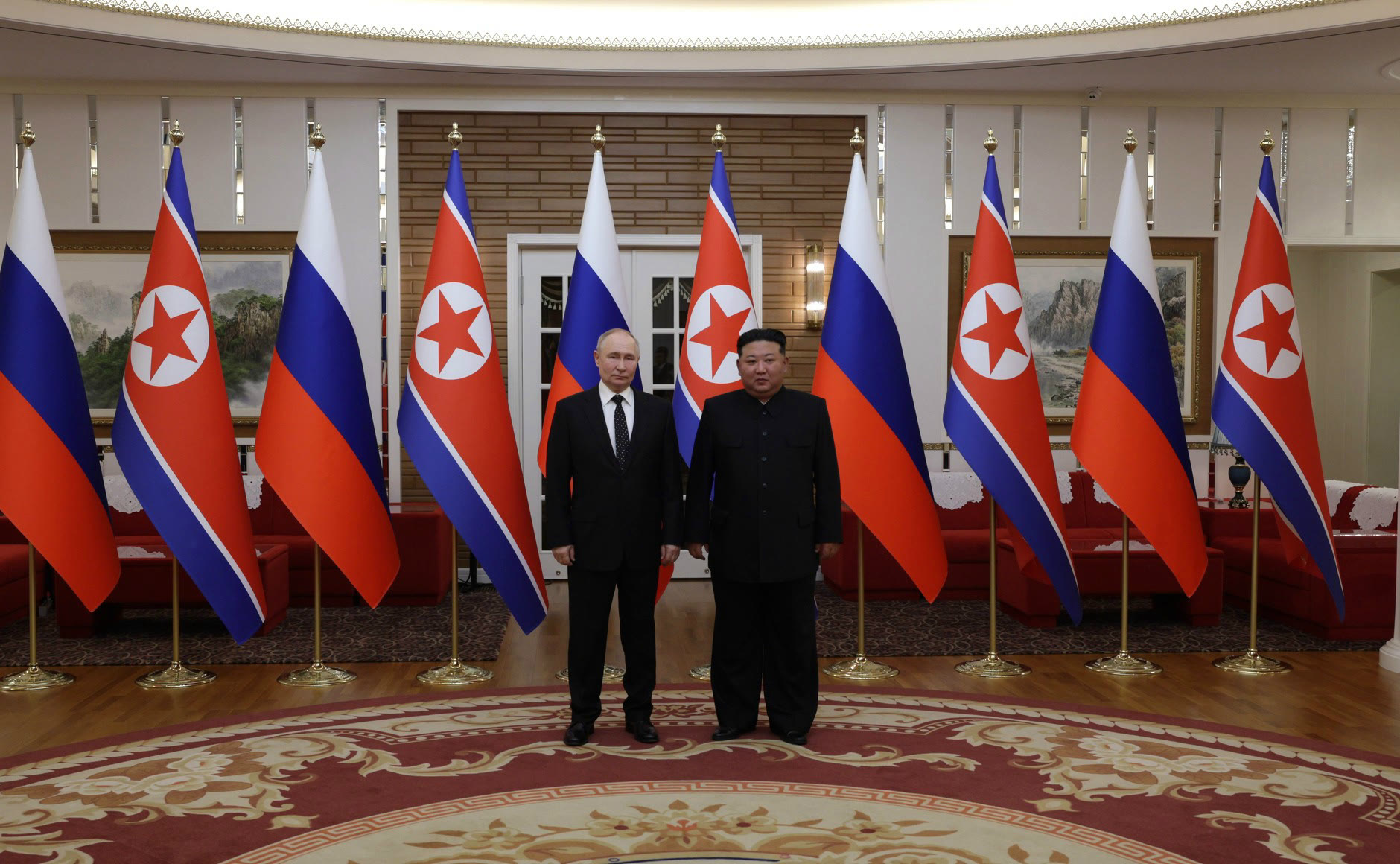
Western and South Korean officials accuse Russia and China of overlooking implementation of the sanctions resolution. Russia and North Korea have strengthened their military and political ties since a 2023 summit between their leaders, Vladimir Putin and Kim Jong-un. A mutual defense pact was also one of the key elements of a partnership agreement signed the following year.
Stay Updated with RuskiGazeta
Subscribe to be informed about special news, developments and announcements. We will keep you informed.
By signing up, you agree to our Privacy Policy