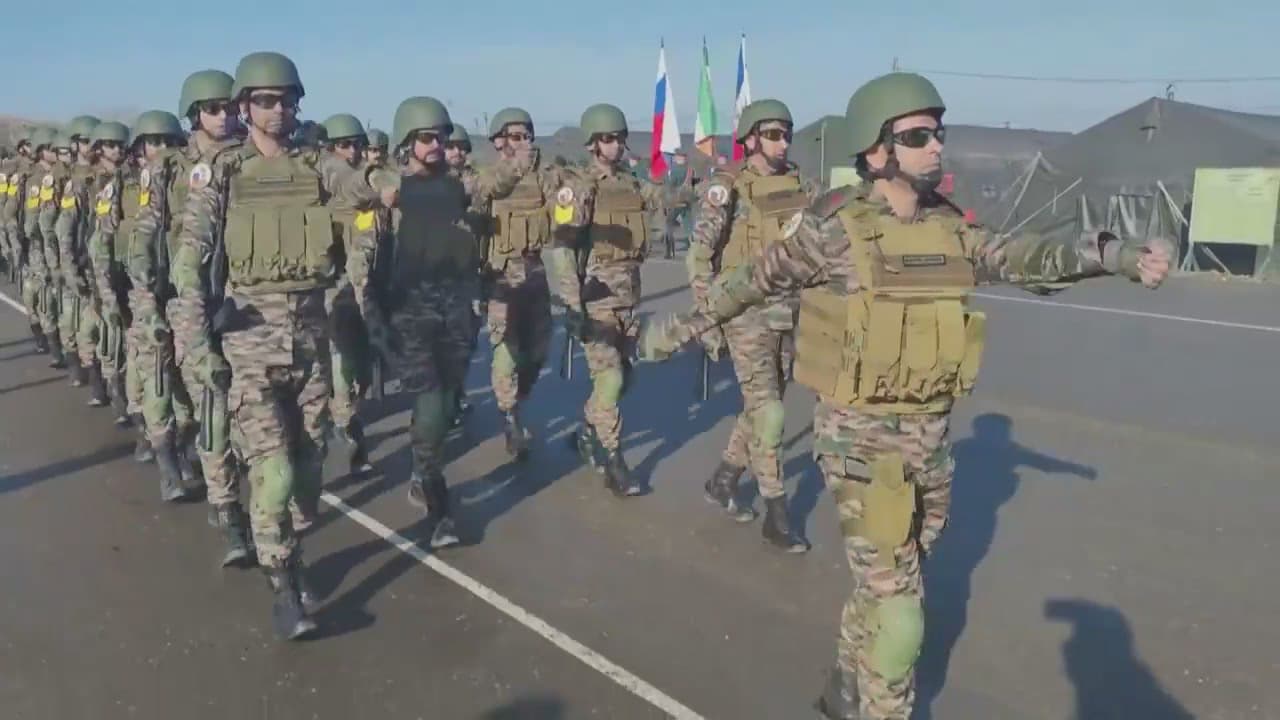
Russia’s use of female soldiers in the war against Ukraine has expanded into combat roles. Their duties now go beyond medical and support services to include drone operation, sniping, machine-gun use and service in assault units.
At least 50 Russian women serving in the war have been killed since February 2022. Annual losses among female soldiers rose from five in 2022 to 15 in 2025; 12 women were killed in the first half of 2026.
Roles opened to women in the military
At the beginning of 2022, 310,000 women worked in the Russian Armed Forces. About 40,000 of them were military personnel. Then-Defense Minister Sergei Shoigu said in March 2023 that 1,100 women had been deployed in Ukraine. That was the only official figure released for female personnel during the war.
Women can sign military contracts in all regions of Russia. Recruitment notices generally seek Russian citizens aged 18 to 45 who have at least a secondary education and no criminal record. The offers include bonuses, salaries and social benefits equal to those provided to men.
Contracts with the Defense Ministry are automatically extended until the war ends. Since late 2025, recruitment drives targeting female students have been conducted at universities in at least five cities and in the Ulyanovsk region. A closed meeting attended only by women was also held at a college in Krasnoyarsk.
From recruitment notices to frontline duties
Some recruitment campaigns were brief. One campaign in the Tomsk region lasted 10 days. A Telegram channel also expanded recruitment it relaunched in March 2026 to include drone, communications, logistics and supply roles in June. Applications were later closed because of high demand.
In some cases, candidates were told that their contracts could be terminated after one year and that women would not be sent to assault units or the front line. In practice, however, Defense Ministry contracts have been extended for as long as the war continues, and women have served on the front line and in assault roles.
During the early phase of the war, Russia mainly sought to recruit women as medics and cooks. By 2023, volunteer groups were publishing notices for female snipers, drone operators, electronic warfare specialists and assault-unit personnel. In late 2024, more than 80 women reportedly left prisons in Siberia to serve as medics in exchange for having their criminal records erased. The practice appears to have ended later.
A female drone operator’s account
Twenty-four-year-old Yelizaveta Tsybina serves as a drone operator under the call sign “Bayana.” After signing her fourth volunteer contract this summer, Tsybina was stationed at a barracks in Russia’s southwestern Kursk region.
Tsybina said she initially did not want to join the army after Russia’s invasion of Ukraine. She said her friends and her boyfriend, who signed a contract in June 2024, joined the military, while her first application was rejected because she had no medical training. After her boyfriend was killed in August of the same year, she received training as a drone operator.
Tsybina joined the St. George volunteer assault brigade, which consists of former Wagner members and Russians who had fought in eastern Ukraine since 2014. She said she was sent on her first mission one week after signing a six-month contract. In late 2024, she used drones for reconnaissance near Soledar in Ukraine’s Donetsk region and helped direct artillery fire.
Tsybina said her unit was later sent to Chasiv Yar. After seeing Ukrainian soldiers enter a shelter, she said she dropped ammunition there. She returned to the Krasnoyarsk region after suffering a minor injury and concussion in May 2025, then rejoined the army four months later. Since then, she has signed three more contracts with volunteer groups.
Tsybina said she had avoided signing a contract with the Defense Ministry because such contracts cannot effectively be terminated while the war continues. She said that after returning to civilian life, she felt alienated from her surroundings, routine and relationships. “I would choose never to have started down this path,” she said.
Casualties and attempts to leave the military
Most of the women killed were between 31 and 49 years old. The oldest was 57-year-old Irina Anisimova from the Saratov region, whose death was announced in October 2024. The youngest was 23-year-old Yana Koshkina, who volunteered in 2023. Koshkina, who commanded a medical evacuation team, was killed in a drone strike near Bakhmut.
Twenty-seven-year-old Valentina Galatova was among the first women killed, dying during a combat mission in Mariupol on April 14, 2022. Galatova went to the Russian-controlled part of eastern Ukraine in 2014 to deliver humanitarian aid. She later lived with the commander of a local formation and joined his unit after he died in 2020.
Galatova was officially listed as a medic. According to her mother, she also worked as a political officer and therapist. She also took part in attacks after the full-scale war began.
Some female soldiers are trying to leave the military because of unpaid wages, violence by commanders and open-ended contracts. A woman who signed a contract with the Defense Ministry in 2023 at the age of 19 after graduating from medical school, identified under the pseudonym Sofia, said she had provided first-aid training to military personnel. She said the monthly pay of about 80,000 rubles promised to her was not paid.
Twenty-two-year-old Sofia said she wanted to leave the military. She argued that recruiting young people into drone units was a way of sending them to Ukraine. “I don’t want to die because of politicians’ wars,” she said.