- BIST10011,559+0.67%
- USD50.07+0.05%
- EUR55.96-0.52%
- GOLD4,118.40+1.07%
- INTEREST36.00%-1.00
- BITCOIN74,037-0.91%
- November 9, 20266°
- BIST10011,559+0.67%
- USD50.07+0.05%
- EUR55.96-0.52%
- GOLD4,118.40+1.07%
- INTEREST36.00%-1.00
- BITCOIN74,037-0.91%
- November 9, 20266°
French unions count 1.6m protesters as ministry says 600,000
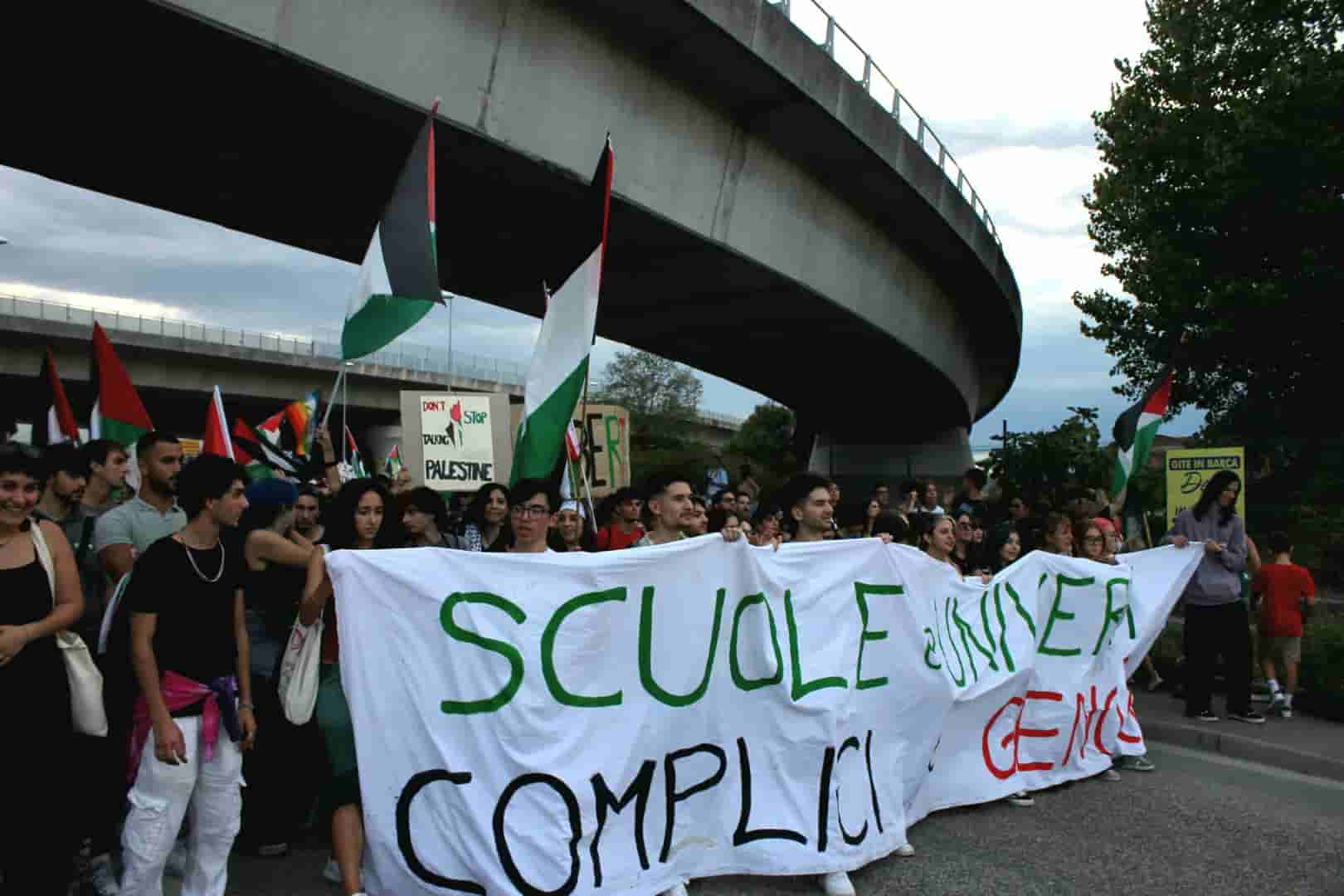
French unions staged a nationwide strike against rising prices and cuts to education spending. The Interior Ministry said about 600,000 people took to the streets, while CGT put the figure at nearly 1.6 million. In Lyon, police dispersed protesters with water cannons and tear gas, while helicopters patrolled over Paris.
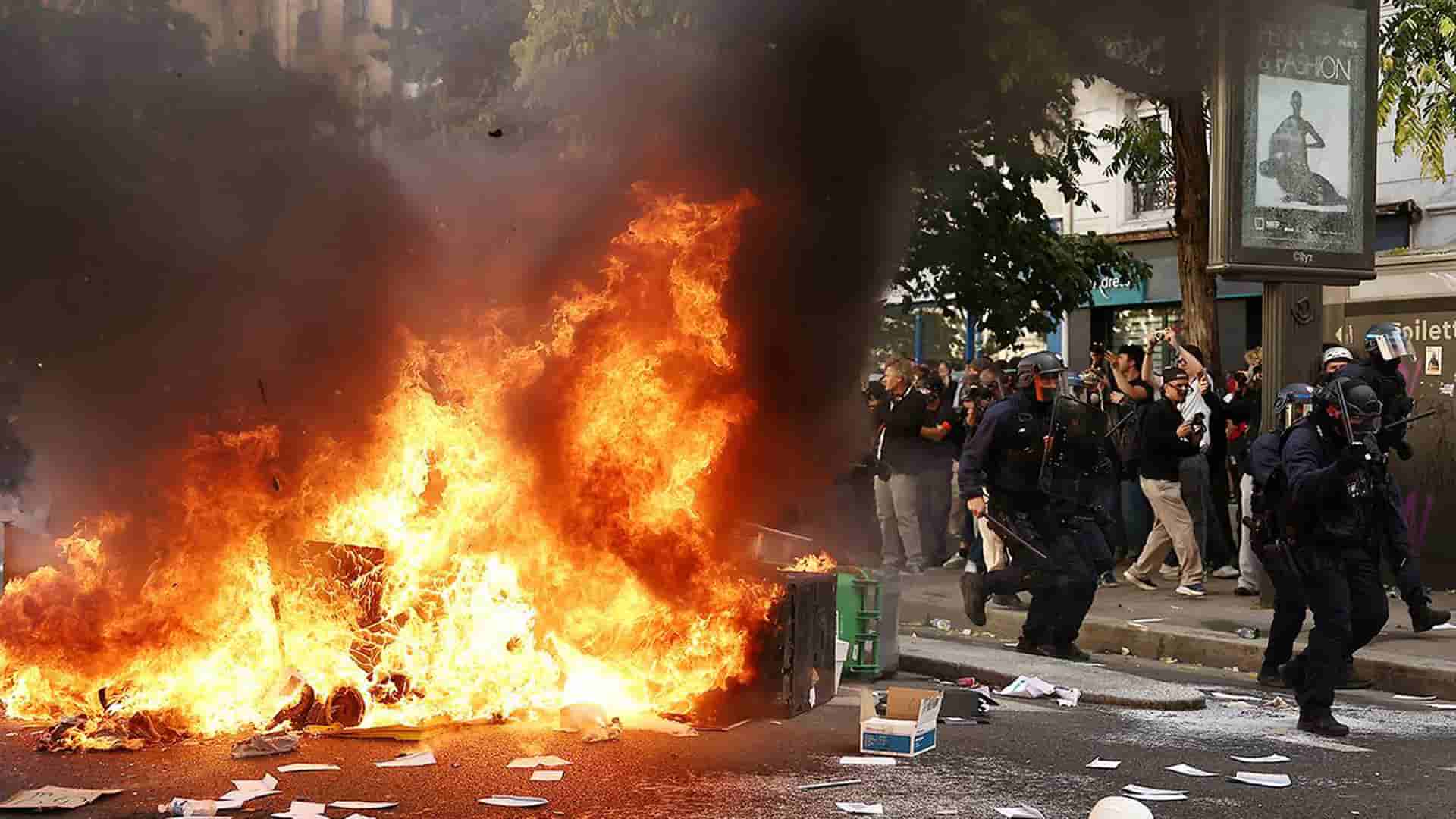
France held a nationwide strike on Thursday, called by an alliance of the country’s leading trade unions. Workers, pensioners, teachers, university students and school pupils demanded higher wages and pensions, an end to rising prices, and increased funding for public services and education. The strike reduced electricity generation at nuclear power plants, while the Eiffel Tower remained closed to visitors all day.
Estimates of the number of participants differed sharply. The French Interior Ministry said that about 600,000 people had taken part in demonstrations across the country, including Paris, by 5 p.m. local time. The largest trade union, CGT, said there were nearly 1.6 million participants, including 350,000 in the capital.
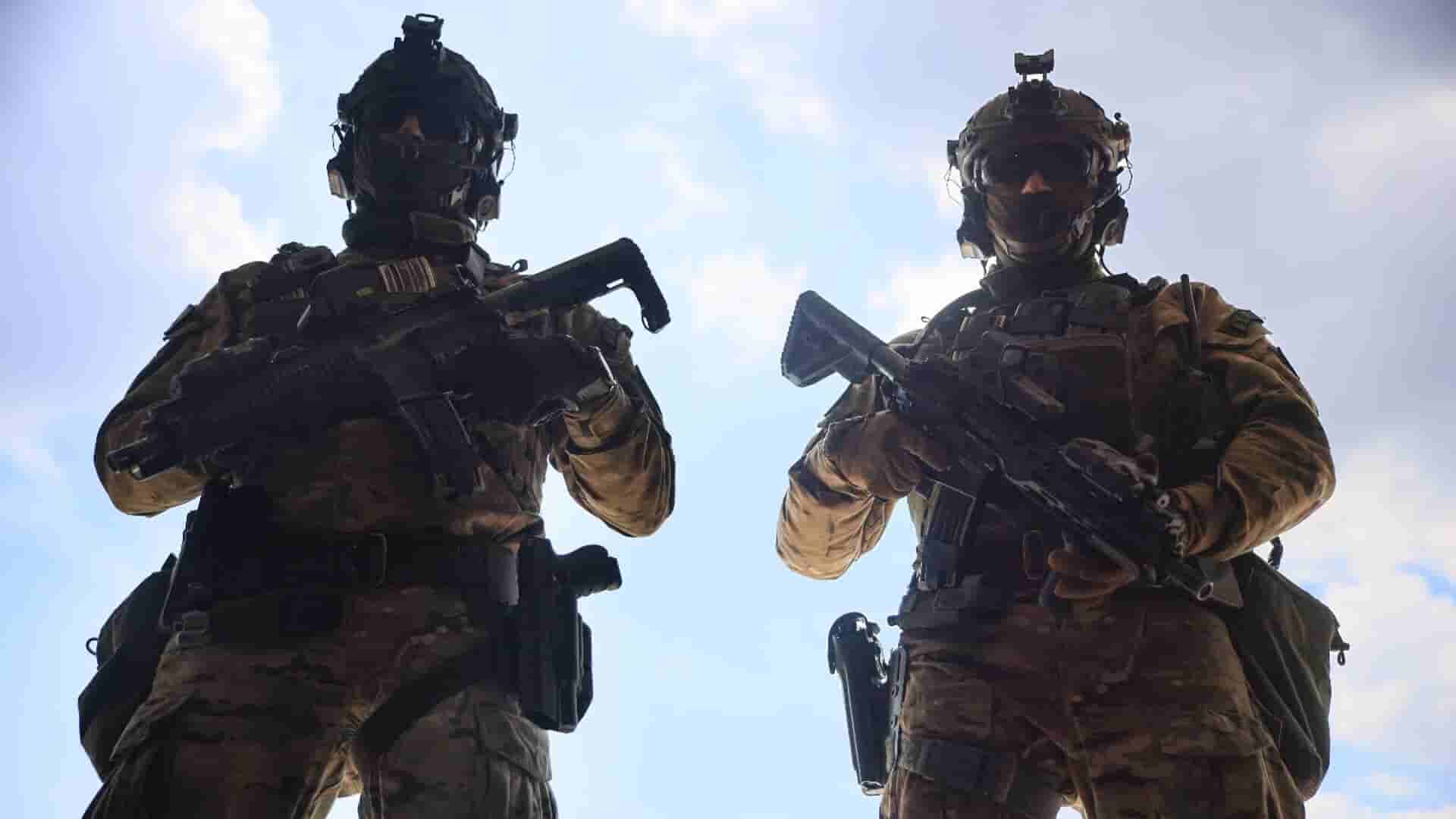
The video shows Paris police helicopters patrolling the skies over the city in case of unrest and looting attempts. Interior Minister Laurent Nuñez said the previous day that more than 220 demonstrations were expected across the country, with about 70,000 police officers and gendarmes deployed to maintain order, supported by armored vehicles, drones and helicopters. President Emmanuel Macron held a defense and security meeting on Wednesday.
“Everything is rising except wages”
In a joint statement, the trade unions stressed: “Everything is becoming more expensive except wages and pensions. The anger is immense.” Gaël Martinez, national secretary of the Solidaires trade union, said people needed a new budget without cuts and called for the largest and most profitable companies to be taxed. “People simply want to live, not survive,” she said.
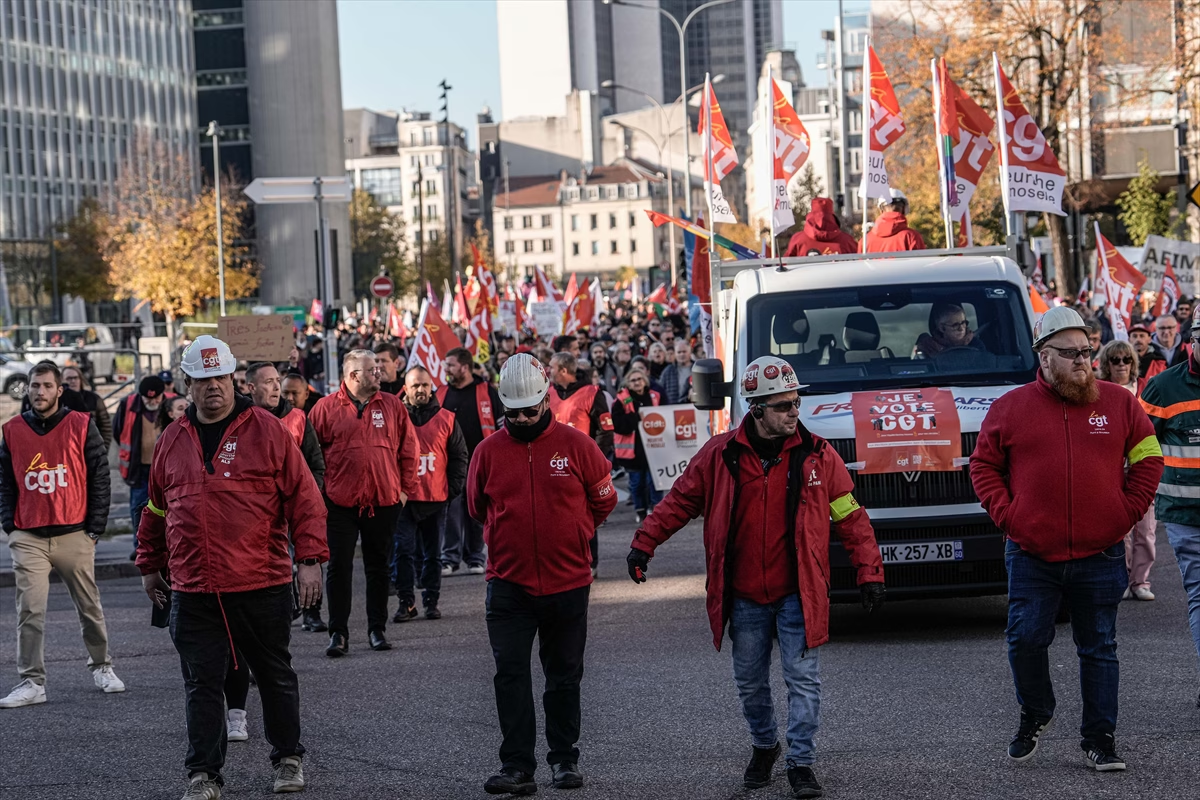
CGT leader Sophie Binet told journalists before the march in Paris: “The government tried to prevent the demonstrations. But the demonstrations have become bigger than ever.” She said the mobilization could be halted only by responding to the unions’ demands: “The longer you wait, the higher the price will be.”
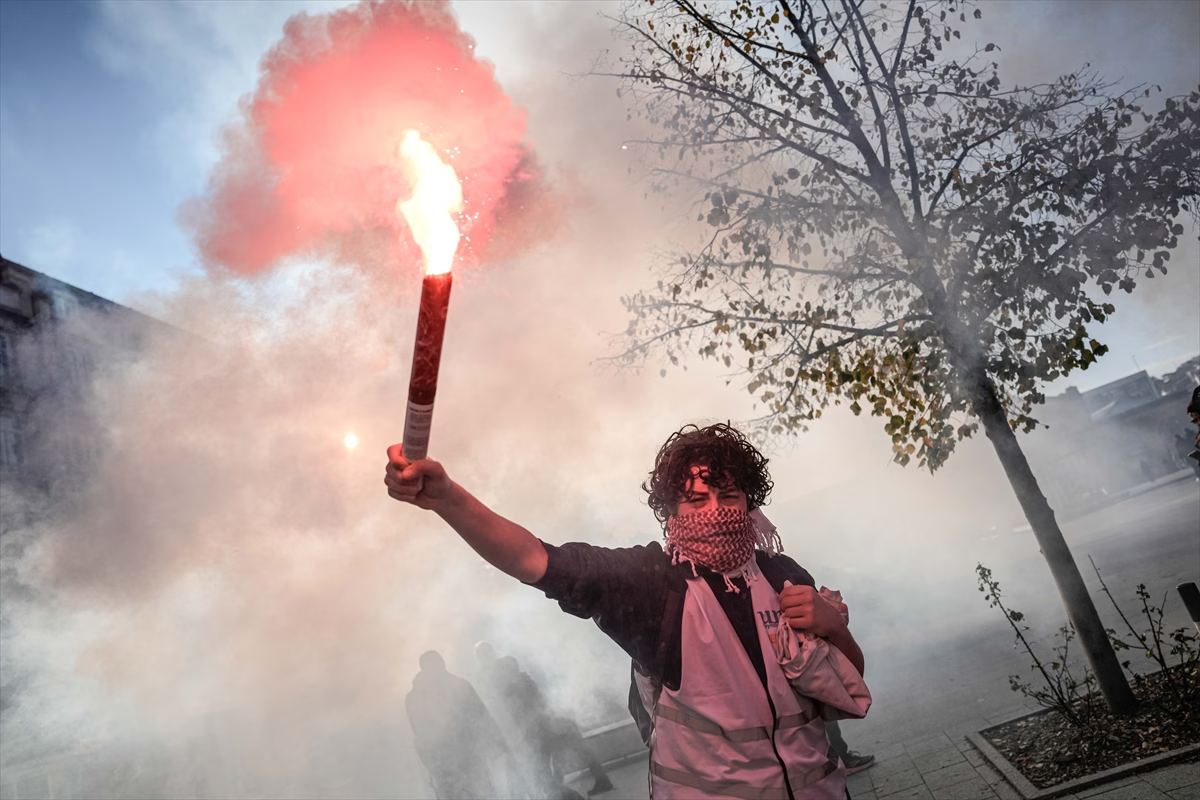
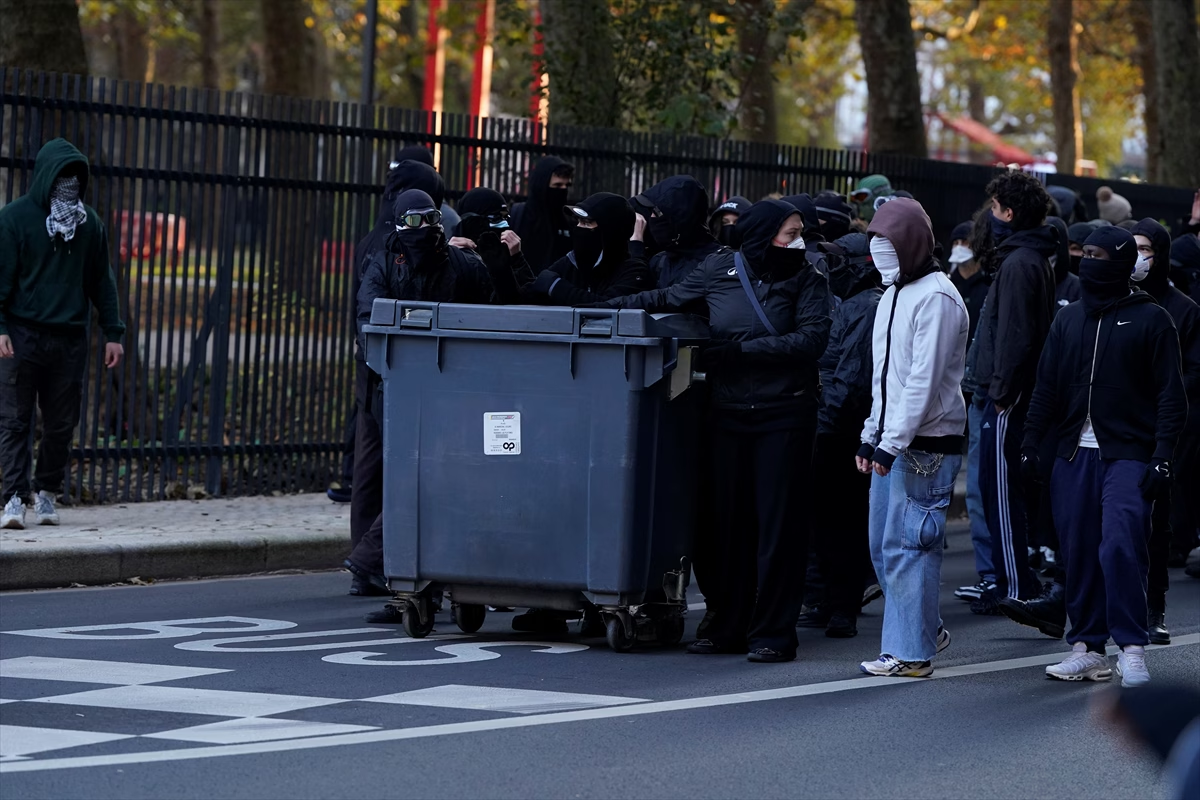
A short video shows protesters in Lyon throwing paint at police officers. The Interior Ministry said several hundred radical protesters confronted security forces in Lyon, some wearing black clothing and face coverings. The ministry said the violence had been contained, but tensions remained.
School pupils block secondary schools
The strike coincided with weeks of protests by school pupils and university students. In Paris, the Panthéon-Assas University and the Victor Hugo, Sophie Germain, Claude Monet, Hélène Boucher and Simone Veil secondary schools were blocked. Police used tear gas outside the Honoré de Balzac secondary school and batons on Rue de Rivoli. Blockades also took place in Bordeaux, Toulouse, Rennes, Lille and Strasbourg.
In Tournefeuille near Toulouse, a fire broke out after fireworks were thrown into a secondary school, and pupils and staff were evacuated. Education Minister Édouard Geffray called the incident “an absolute scandal.” In Rennes, metal pétanque balls were thrown at police officers, while other objects were thrown in Pau and Orléans. Secondary-school trade unions said more than 1,000 schools had been blocked or closed, while the Education Ministry put the figure at 81.
In these images, police officers with shields push back the crowd and pin several protesters to the asphalt during arrests. The French government is defending the police response but has promised to investigate possible violations. Nearly 8,000 people have been arrested since September 17, when protests began over conditions in the education system. The Interior Ministry said: “Everyone has the right to protest, but putting others in danger and damaging property is unacceptable.”
Government response
Before the strike, the authorities made a series of concessions. Geffray announced that the government was abandoning its planned cut of 836 positions in state secondary schools and would create 500 new teaching posts in secondary schools. From the 2027 academic year, class sizes in half of the secondary schools in the most disadvantaged areas will be capped at 28 pupils, and the rule will be extended to all secondary schools from 2028. Prime Minister Sébastien Lecornu allocated about $4.4 billion to local authorities for school renovations.
The video shows a car engulfed in flames after being set alight during protests in Lyon. Garbage bins also burned in the city. In Paris, the main march began in the afternoon from Place de la République. The procession began peacefully, but about two hours later some demonstrators at the front of the column clashed with police, who used tear gas.
The protests are becoming an important factor ahead of the presidential election, which will be held in five months. Macron cannot run for a third term and will leave office in May. Marine Le Pen, leader of the National Rally, wrote on X: “The social crisis must receive political answers, and we will provide them.” Raphaël Glucksmann, the candidate of the centre-left Place Publique party, said at the march in Paris: “This country needs justice.” Jean-Luc Mélenchon, leader of La France Insoumise, also took part in the march.
Images from Lyon show police dispersing demonstrators with water cannons and tear gas. The current wave of protests began with a school pupils’ demonstration against staff shortages at the Antoine de Saint-Exupéry secondary school in Créteil, a suburb of Paris. It then spread across the country and grew into a broad movement against rising prices. Rioting and looting on October 17 intensified criticism of Macron.
Video: ConflictTR / X. Photo: Anadolu
Stay Updated with RuskiGazeta
Subscribe to be informed about special news, developments and announcements. We will keep you informed.
By signing up, you agree to our Privacy Policy