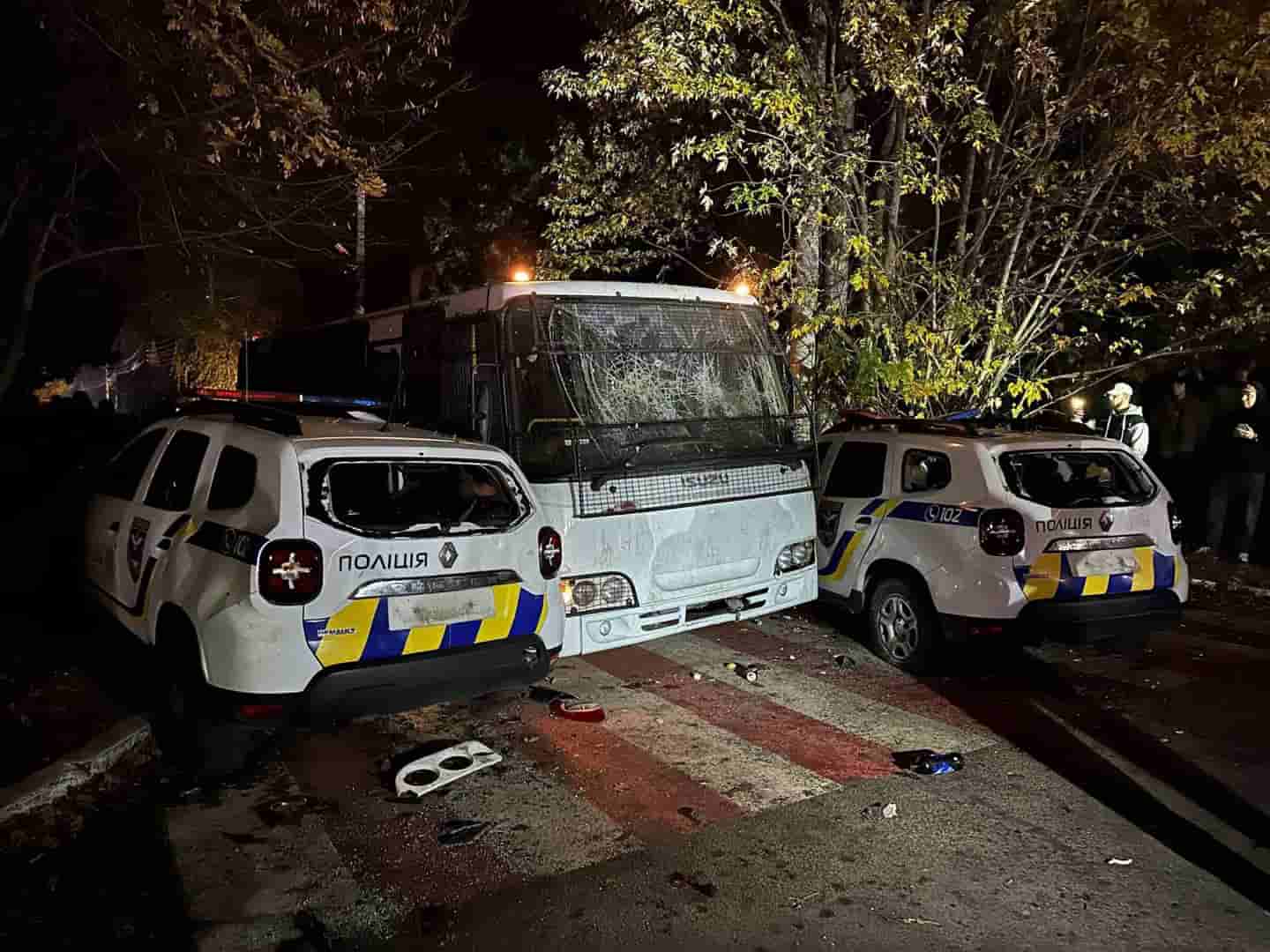
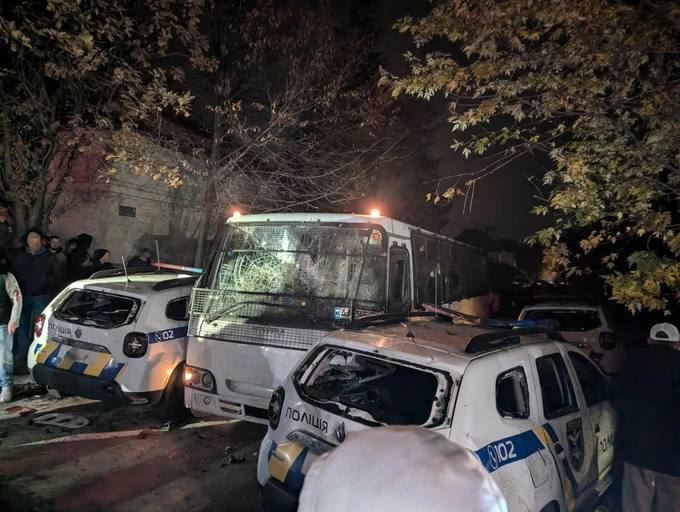
On the evening of November 2, hundreds of people gathered outside a private house in the village of Petropavlivska Borshchahivka in Kyiv region, where, according to Ukraine’s National Guard, a unit’s temporary deployment post was located. The gathering was prompted by social media reports claiming that about 40 mobilized personnel were being unlawfully detained and beaten in the basement.
The crowd tried to break through the gates, threw smoke grenades, and damaged the windows and fence. Ukrainian media reported that shots were heard from the yard and that police special forces from the KORD unit arrived at the scene. Kyiv region police denied reports of unlawful detention and a death, but confirmed that they had received a call from employees of a “private ambulance service” who allegedly had been prevented from reaching a patient. Journalists later found that the company in question had not operated since 2023.
National Guard Commander Oleksandr Pivnenko, who arrived at the scene, said that mobilized personnel from territorial recruitment and social support centers were completing paperwork and undergoing checks at the house, while service members returned to the unit after unauthorized absence were also there. “We do not torture people—we form units,” he said. Pivnenko said he spoke with 18 service members inside the building, and four who needed medical assistance were taken to hospital. The National Guard’s 1st Corps “Azov” confirmed that four detainees who had been absent from their unit without authorization had injuries.
Later, Presidential Office head Kyrylo Budanov arrived at the scene. He said that 14 people were inside the building, led a 14-year-old teenager out of the house, and said that many such facilities exist. After he left, Ukrainian media reported that a UNIAN journalist was attacked.
Pivnenko ordered an internal investigation and promised that those responsible would be punished if violations were found. Interior Minister Ivan Vyhovskyi said that the State Bureau of Investigation and the military ombudsman’s office were working at the scene. Azov Commander Denys Prokopenko accused the rioters of discrediting the army and creating an information narrative favorable to Russia.