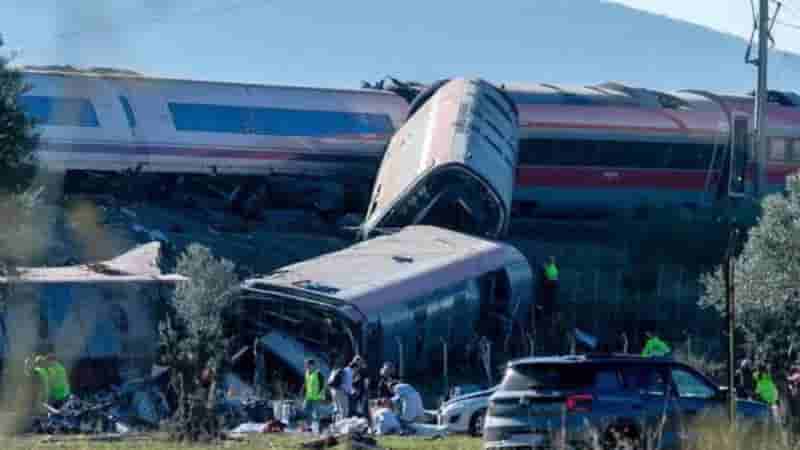
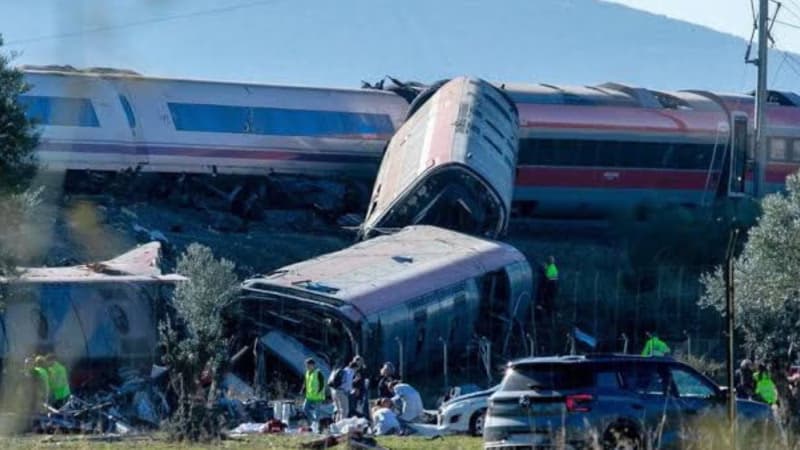
The death toll from the collision of two high-speed passenger trains on the Madrid-Seville line between Urda and Los Yébenes in the province of Toledo has risen to at least 68 people, reported Emiliano García-Page, head of the government of Castilla-La Mancha. According to his data, 24 people died on the Renfe AVE train and 44 on the Iryo train that was stopped on the tracks; 50 people were injured.
Rescuers Continue Search
García-Page did not rule out that new bodies would be found as the train cars are moved. Cranes have been brought to the scene to clear the wreckage, and the Military Emergency Unit (UME) has been involved in the work.
Three Days of Mourning Declared in Spain
Prime Minister Pedro Sánchez, who visited the operational headquarters in Urda, stated: “Today Spain is in mourning. All of Spain is in mourning.” Mourning has been declared nationwide for October 29, 30, and 31: flags will be flown at half-mast on government buildings, at foreign missions, and on Navy ships. Castilla-La Mancha, Madrid, and Andalusia have also declared their own periods of mourning.
According to Sánchez, “it is unacceptable for a country like Spain to experience two accidents on high-speed lines in one year.” He promised that any possible negligence would be identified, and failures in the safety system would receive “the most decisive response.”
System Control Failure Named as Cause
Minister of Transport Óscar Puente reported that the traffic control system failed in Urda, and six trains were stopped on the line. According to him, the collision occurred due to human error after a computer system failure. The investigation is being conducted by an independent commission for railway accidents, judicial authorities, Adif, and Renfe.
The crash occurred at 8:54 a.m. local time between the towns of Urda and Los Yébenes. The trains involved were Renfe state railway's AVE No. 2080, carrying 393 passengers, and private operator Iryo's train No. 6076, which had 147 passengers on board, including an infant. Initial information indicated that one of the trains traveling in the same direction crashed into the rear of another train that was standing on the tracks, causing two carriages to derail.
How the crash happened
According to preliminary information from El País, a technical failure occurred in the line's signaling system, bringing the trains to a stop. After the safety system was switched to manual mode, an operator at the control center in Madrid apparently mistakenly cleared the second train to proceed, although another train was standing on the tracks.
Rail infrastructure operator Adif said the cause of the crash had not yet been established. The investigation is being conducted by the court in Orgaz, which is also examining the operation of the LZB automatic train control system.
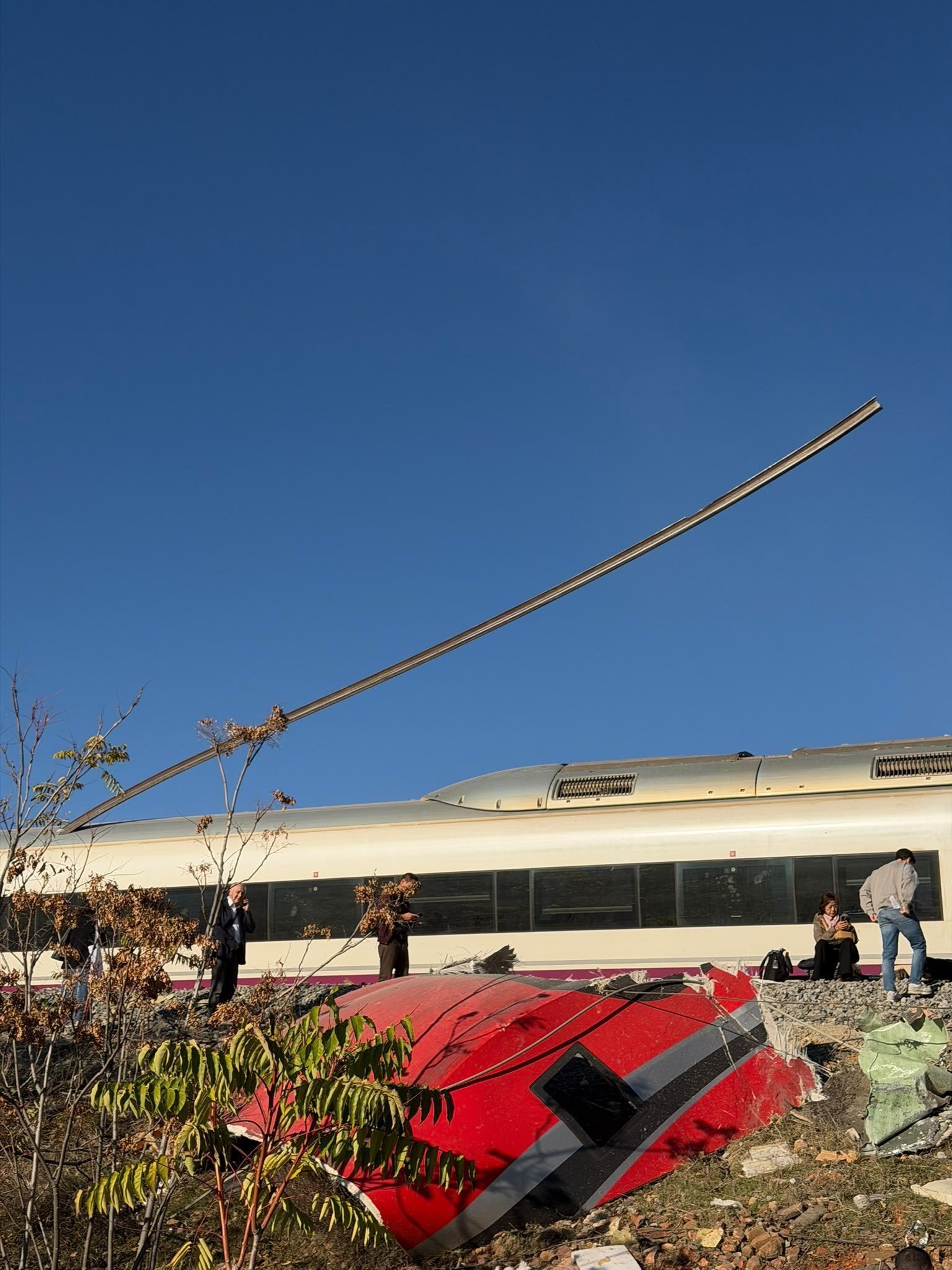
A rail pierced a carriage
Footage from the crash site showed a rail torn loose by the force of the impact piercing one of the carriages from side to side. Aerial images showed derailed carriages piled on top of one another.
Rescue operation
Dozens of ambulances, fire engines and rescue teams were sent to the crash site. Red Cross workers provided assistance to victims at a sports hall in Urda. Emiliano García-Page, head of the Castilla–La Mancha region, warned that the death toll was likely to rise because rescuers had not yet reached the deepest parts of the wrecked carriages.
All the injured were evacuated from the crash site. The Civil Guard opened assistance centers for relatives in Madrid, Seville, Córdoba and Toledo. High-speed services between Madrid, Ciudad Real and Andalusia were suspended.
Mourning in Spain
Prime Minister Pedro Sánchez canceled a public event to monitor the situation and briefed King Felipe VI by telephone. The king called the incident a “terrible accident,” expressed his condolences and canceled his engagements for Wednesday and Thursday. Transport Minister Óscar Puente said he was at the control center and trying to obtain “all possible information about what happened.”
The Congress of Deputies canceled all events scheduled for Wednesday. The mayor of Seville declared three days of mourning in the city, while the Federation of Municipalities of Spain called on people to observe a minute of silence at 8 p.m. outside town halls across the country in memory of those who died.
Ten months after Adamuz