- BIST10011,722-2.89%
- USD49.42+0.06%
- EUR55.41+0.20%
- GOLD4,178.40+0.20%
- INTEREST37.00%-1.00
- BITCOIN81,293-1.02%
- October 16, 202612°
- BIST10011,722-2.89%
- USD49.42+0.06%
- EUR55.41+0.20%
- GOLD4,178.40+0.20%
- INTEREST37.00%-1.00
- BITCOIN81,293-1.02%
- October 16, 202612°
Türkiye, Saudi Arabia and Pakistan hold key defense summit in Istanbul
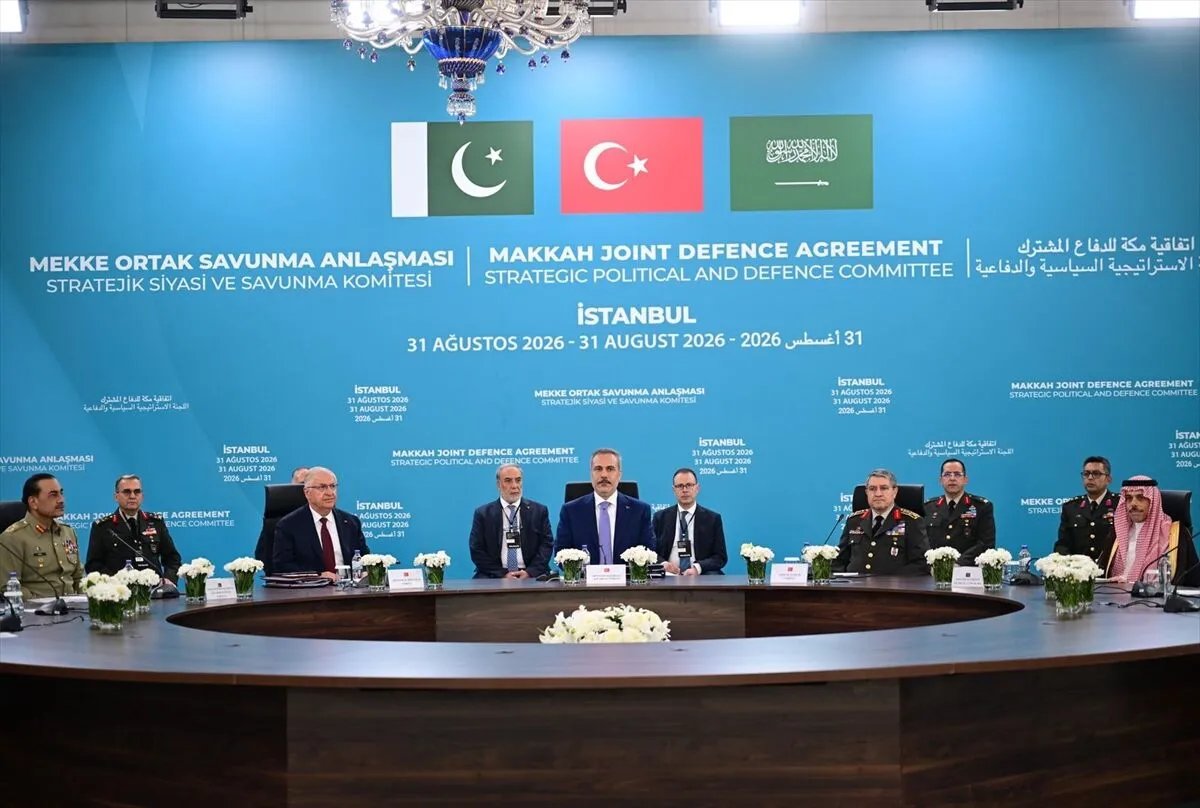
Türkiye, Saudi Arabia and Pakistan held the first meeting of the Strategic Political and Defense Committee in Istanbul, established under the Mecca Agreement on joint defense. Senior diplomats and military officials from the three countries discussed defense cooperation, joint arms production, military coordination and regional security issues.


Türkiye, Saudi Arabia and Pakistan brought senior foreign policy and defense officials together in Istanbul on August 31, 2026, taking an important step toward developing trilateral strategic and military cooperation.
The first meeting of the Strategic Political and Defense Committee, established under the Mecca Agreement on joint defense signed by the three countries on August 7, 2026, was held in Istanbul.
The new mechanism will primarily seek to turn the provisions of the agreement into concrete projects and establish a road map for further political, military and defense-industry cooperation.
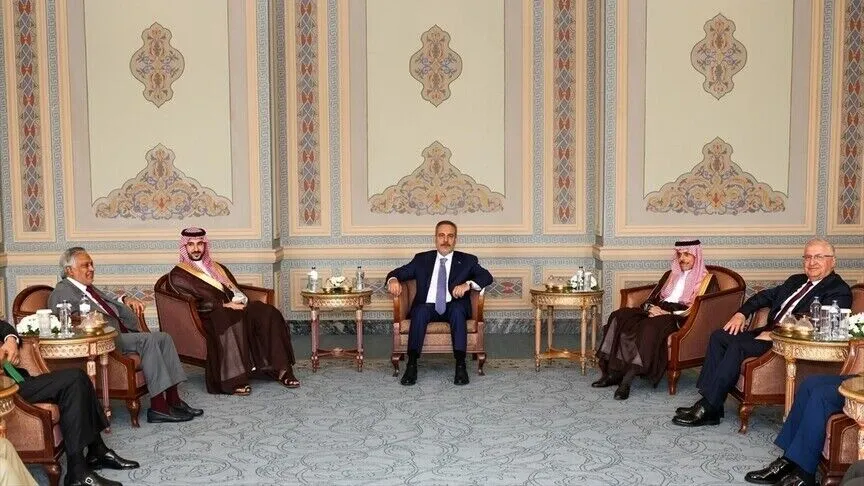
Fidan, Güler and Bayraktaroglu represent Türkiye
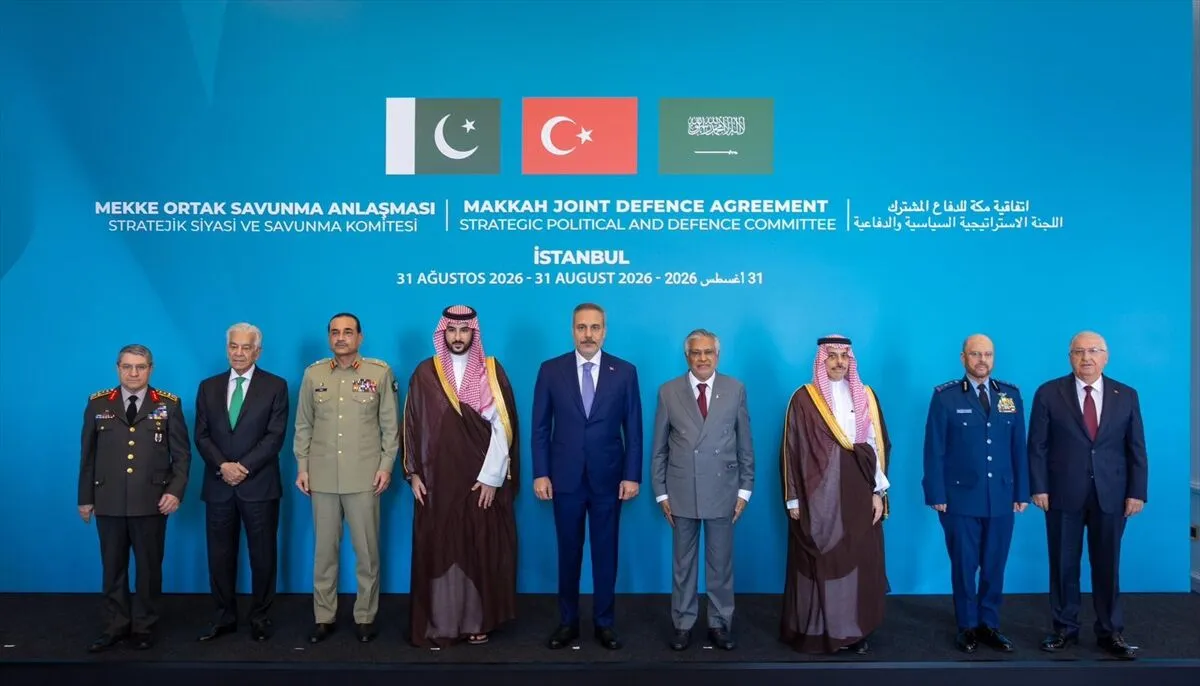
Türkiye was represented at the talks by Foreign Minister Hakan Fidan, National Defense Minister Yaşar Güler and Chief of General Staff General Selçuk Bayraktaroglu.
Saudi Arabia’s delegation included Foreign Minister Prince Faisal bin Farhan Al Saud, Defense Minister Prince Khalid bin Salman and Chief of General Staff General Fayyad bin Hamed Al-Ruwaili.
Pakistan was represented by Deputy Prime Minister and Foreign Minister Muhammad Ishaq Dar, Defense Minister Khawaja Muhammad Asif and Field Marshal Asim Munir.
The participation of the three countries’ diplomatic, defense and military leaders underscores the high level of the new cooperation mechanism.
Joint arms production is a key topic
Defense-industry cooperation was one of the most important areas discussed during the talks.
The parties intend to strengthen the defense capabilities of the three countries, enhance interaction between their armed forces and expand cooperation in defense technologies.
Particular attention is being paid to opportunities for jointly developing and producing defense systems and military equipment.
Türkiye’s developed defense industry, Pakistan’s significant military capabilities and Saudi Arabia’s growing investments in the defense sector could open new opportunities for major trilateral projects.
Regional security and counterterrorism
Regional and international security issues were also included on the meeting’s agenda.
The parties discussed cooperation in counterterrorism, coordination between their armed forces and mechanisms aimed at strengthening stability in the region.
The new committee is expected to determine the main areas of cooperation and establish an institutional framework for implementing the three countries’ decisions.
Principle of collective defense
One of the most important provisions of the Mecca Agreement is the principle of collective security.
The agreement stipulates that an armed attack against one of the participating countries will be considered an attack against all three states.
This mechanism is intended to strengthen joint deterrence and deepen security cooperation among Türkiye, Saudi Arabia and Pakistan.
The agreement was signed on August 7 by Türkiye’s President Recep Tayyip Erdoğan, Saudi Arabia’s Crown Prince Mohammed bin Salman and Pakistan’s Prime Minister Shehbaz Sharif.
Hakan Fidan meets Faisal bin Farhan
On the sidelines of the Istanbul talks, Türkiye’s Foreign Minister Hakan Fidan also held a separate meeting with Saudi Arabia’s Foreign Minister, Prince Faisal bin Farhan.
The parties discussed Turkish-Saudi relations, opportunities to further expand bilateral cooperation and current regional developments.
The meeting took place amid intensive diplomatic contacts in Istanbul involving representatives of the three countries.
Trilateral partnership moves into implementation
The first meeting of the Strategic Political and Defense Committee shows that cooperation among Türkiye, Saudi Arabia and Pakistan is moving from signing an agreement to practical implementation.
The parties are expected to develop a road map covering military coordination, the defense industry, joint projects, counterterrorism and broader regional security issues.
Against the backdrop of rapidly changing geopolitical conditions in the Middle East and South Asia, the emerging defense partnership among Türkiye, Saudi Arabia and Pakistan could become one of the notable new factors shaping regional security.
Stay Updated with RuskiGazeta
Subscribe to be informed about special news, developments and announcements. We will keep you informed.
By signing up, you agree to our Privacy Policy

















