- BIST10010,760-3.63%
- USD49.86+0.15%
- EUR55.82+0.52%
- GOLD3,898.90-3.29%
- INTEREST36.00%-1.00
- BITCOIN77,643+0.26%
- November 1, 202614°
- BIST10010,760-3.63%
- USD49.86+0.15%
- EUR55.82+0.52%
- GOLD3,898.90-3.29%
- INTEREST36.00%-1.00
- BITCOIN77,643+0.26%
- November 1, 202614°
Russian Railways enters social capital registry as emissions fall 6%
Russian Railways was added to the federal register of companies contributing to social welfare under the Social Capital platform following an independent assessment of its contribution to social well-being. The company’s emissions from stationary sources fell by 6%, while the number of volunteer employees reached 95,000.


The Social Capital platform added Russian Railways to the federal register of companies contributing to social welfare. The company received this status after completing an independent assessment of its contribution to social capital.
Asiyat Bagatyrova, director general of Social Capital, said Russian Railways contributes to social capital by developing infrastructure that improves the quality of life for millions of people. Bagatyrova said the company’s responsible approach was not an element added to its core operations later, but an integral part of them.
According to environmental data cited by Bagatyrova, Russian Railways’ emissions from stationary sources fell by 6%. Electric traction also accounted for more than 85% of total transportation.
Number of volunteer employees reaches 95,000
The company was also described as one of the leading organizations in corporate volunteering. The number of volunteer employees at Russian Railways reached 95,000, a result recorded in the Russian Book of Records.
Valery Tanaev, deputy director general and chief engineer of Russian Railways, said the performance of large companies was not measured solely by economic indicators. Tanaev said the quality of relationships established with employees, society, the state and other stakeholders was also important.
Tanaev said Russian Railways completed its assessment under the Standard for Corporate Social Capital with a high score. He said the result demonstrated that the company was a socially responsible organization, a reliable employer and a reliable partner.
Emissions and energy savings in 2025
According to company data, total greenhouse gas emissions fell by 4.4% in 2025 compared with 2024. The 6% decline in emissions released into the atmosphere from stationary sources was driven by the development of technologies.
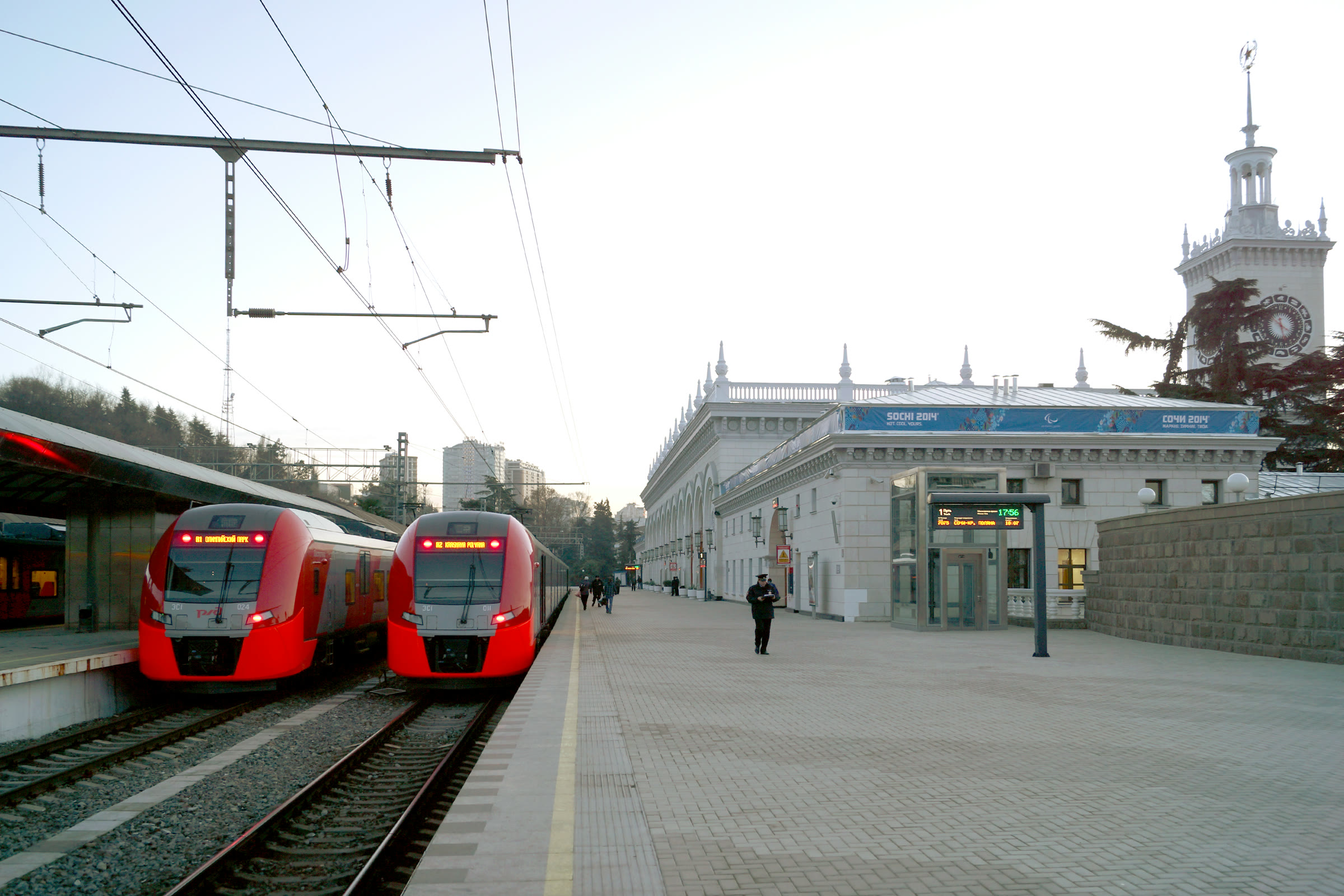
Russian Railways is continuing a climate project that envisages using natural gas instead of fuel oil in boiler houses. The company is also participating in a government experiment aimed at achieving carbon neutrality on Sakhalin. Carbon dioxide emissions on the island were reduced by 9,500 tons in 2025 through technological and administrative measures.
Energy efficiency in production activities increased by 1.8% in 2025. Total savings on fuel and energy reached approximately 6.7 billion rubles.
Water consumption fell by 3.9% over the same period, while discharges of polluted wastewater declined by 3.5%. Approximately 85% of the waste generated by the company was neutralized and returned for secondary use. Revenue from the sale of recoverable waste amounted to 12.8 billion rubles.
Measures for employees and the environment
As part of efforts to clean up contaminated areas near stations, Russian Railways cleaned four sites that had caused accumulated environmental damage last year. The company’s goals also include enhancing the prestige of railway professions and reducing the departure of qualified employees.
Working conditions were improved at 46,800 workplaces in 2025. That year, 79,300 employees and family members benefited from health-related stays through Russian Railways’ network of 57 sanatoriums and boarding houses.
Company employees take part in various campaigns and environmental clean-up activities every year. As part of these efforts, which include cleaning urban areas and the banks of water bodies and planting trees and shrubs, more than 429,000 saplings were planted in 2025 across an area equivalent to 109 football fields.
Stay Updated with RuskiGazeta
Subscribe to be informed about special news, developments and announcements. We will keep you informed.
By signing up, you agree to our Privacy Policy