Tax incentives for tourism investments in Krasnodar Krai have been extended until the end of 2030, while Governor Veniamin Kondratyev announced that the region expects to attract at least 18 million tourists by the end of 2026. Kondratyev said more than 13.6 million tourists visited the region during the first part of 2026, including 8.3 million visitors during the summer season.
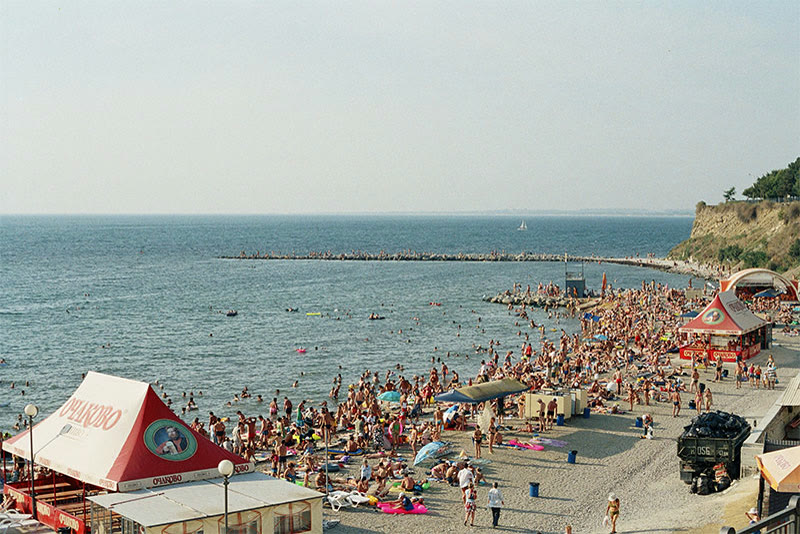
According to the governor, although tourist numbers declined slightly compared with the previous year, the overall picture remained at last year’s level. During the peak season, 11,000 hotels and sanatoriums were operating, 87 of them under all-inclusive or ultra-all-inclusive concepts. More than 530 equipped beaches were opened for visitors.
Incentives for tourism investments extended through 2030
Kondratyev said investors were being offered around 20 different forms of state support, including an investment tax deduction on corporate income tax, loans on favorable terms and subsidies. Tax incentives for resort and health tourism investments in the region will remain in effect until the end of 2030.
Starting in 2027, businesses that build four- or five-star hotels or sanatoriums will be exempt from property tax for 10 tax periods on the real estate placed into operation. The regulation will also cover projects to establish or renovate sanatoriums licensed to provide healthcare services, as well as projects to redevelop buildings designated as cultural heritage sites. Projects benefiting from these measures will need to involve investments exceeding 3 billion rubles.
In 2021, the construction of multi-story residential buildings was banned within the 500-meter coastal zone of resort areas in Krasnodar Krai. Kondratyev said the regulation and investment support had expanded the tourism sector, while the investment portfolio in sanatorium and resort tourism had grown 30-fold over the past five years.
About 26.3 billion rubles was invested in the sector over the past six months. This was approximately 30 percent higher than in the same period of 2025. More than a quarter of the region’s active investment projects involve sanatoriums and tourism complexes. The total value of more than 220 projects under implementation has reached approximately 1.5 trillion rubles, while the investments are expected to create more than 55,500 new jobs.
Tourism season to extend throughout the year
Kondratyev said tourism in Krasnodar Krai was not limited to the summer months. Active recreation, gastronomy and wine tourism, ecotourism, rural tourism, event tourism and sanatorium services are offered throughout the year. The region has around 800 tourist attractions, while the number of hotels with developed infrastructure is also increasing.
The governor emphasized that the priority was not only to increase visitor numbers but also to provide tourists with a safe, high-quality holiday experience.
Children’s camps receive tax exemptions
At the beginning of 2026, municipalities exempted sanatoriums meeting specific criteria, as well as children’s recreation and health facilities, from the tourist tax. Kondratyev said the measure provided significant support to children’s health facilities, but that it would not be possible to decide whether to extend the exemption into the next season before the year-end results were available. He said the final decision would be made by the municipalities.
Around 1,700 children’s camps of various types operated in Krasnodar Krai during the summer. Some 300,000 children from different parts of the country spent holidays or received healthcare services at these facilities.
Under the state program “Children of Kuban,” more than 40,000 children were sent to sanatoriums free of charge, with more than 2 billion rubles allocated from the regional budget for this purpose. The program covered children with disabilities, children without parental care, children from families facing difficult living conditions or on low incomes, children of participants in the Special Military Operation, and children who achieved success in competitions, contests and academic olympiads.
Payments from the regional budget to cover part of the cost of children’s camp and sanatorium vouchers purchased by families themselves also exceeded 4.3 million rubles.
Winemaking and ecotourism routes expand
Sixty percent of wineries in Krasnodar Krai receive tourists. Kondratyev announced that the region ranked first in Russia in wine and champagne production last year, that more than one-third of the country’s vineyards are located in Krasnodar Krai, and that the number of wine businesses had tripled over the past five years.
About 1 billion rubles was allocated from federal and regional budgets this year for establishing vineyards. Thirty-five wineries in Novorossiysk, Gelendzhik and Anapa, as well as in the Temryuk, Krymsk and Seversky districts, offer visitors tours and event programs. The number of these businesses has increased sevenfold over the past 10 years.
The national route called “Wine Roads of Krasnodar Krai” is also among the projects aimed at developing wine tourism. Some wineries and the Wine Tourism Center received subsidies in different years under the national project “Tourism and Hospitality.”
The region has more than 360 tourism routes. Of these, 149 pass through specially protected natural areas. When new routes are being developed, safety, visitor density in natural areas, terrain features, and the protection of rare plants and animals are taken into consideration.
Information centers, entrance areas, sanitary facilities and photo points will be created along the planned routes. Safety measures will also be introduced in dangerous sections.
Six new ecotourism routes under development include a route from the Seversky district to Mount Sober-Bash, an ecological trail to be established at the Cankhotsk Boru in Gelendzhik, and the Kadash forest trail near Tuapse. Routes to be developed in the Goryachy Klyuch, Psebaysky and Tuapse protected areas have also been included in the project. The routes also include weekend trails to the Kaverzinsky Waterfalls, Kapustinsky Waterfall and Mount Indyushka.
Preparatory work on the projects has been completed, procedures concerning the long-term use of forest areas have been carried out, and the project and cost documentation has been prepared. The next stage will be the start of on-site work to develop the routes.