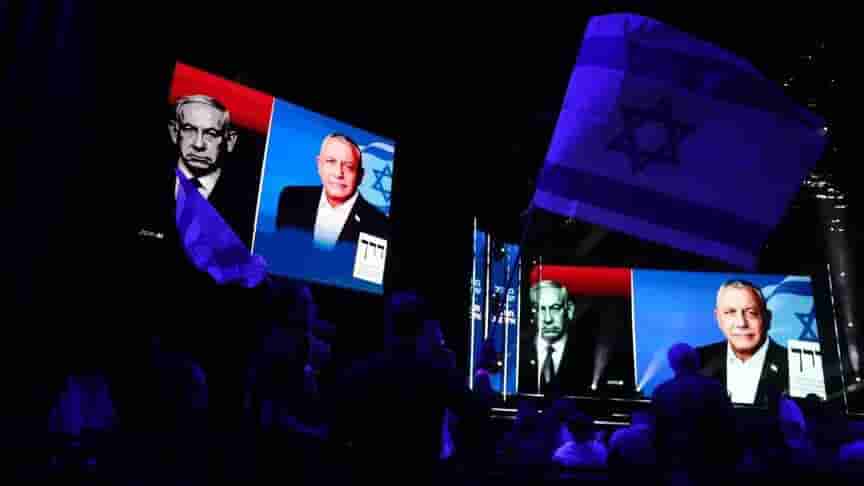
As votes are counted in Israel, Benjamin Netanyahu's bloc's advantage is shrinking. After processing data from 8,702 out of 13,389 polling stations (65%) and counting over 3.75 million valid ballots, the prime minister's bloc dropped from 56 to 54 seats — seven less than needed for a majority. Gadi Eisenkot's opposition bloc maintains 48 seats, and Arab parties rose from 16 to 18.
Interim Count Results
- Likud — 27;
- Eisenkot's Yashar — 21;
- Joint List — 12;
- Naftali Bennett's Beyahad — 11;
- Avigdor Liberman's Yisrael Beiteinu — 8;
- Democrats — 8;
- Yahadut HaTorah — 7;
- Shas — 7;
- Itamar Ben-Gvir's Otzma Yehudit — 7;
- Religious Zionism — 6;
- Ra'am — 6.
Results are not yet available from Kfar Saba, Ra'anana, Sakhnin, and Kafr Qasim. The counting of over 500,000 ballots in “double envelopes” — votes from military personnel and diplomats — will begin at midnight from Wednesday to Thursday and conclude on Thursday evening, with additional checks next week.
Golan: “Netanyahu Lost”
“Netanyahu lost. I can count to 120,” wrote Democratic leader Yair Golan, calling for a government to be formed with the support of Arab parties. Eisenkot stated that “the people chose change” and called on Netanyahu to resign, while the prime minister himself called for a “Zionist majority” to unite.
Meanwhile, according to sources, US President Donald Trump does not want to see Itamar Ben-Gvir and likely Bezalel Smotrich in the next government, which could push for a broader national unity coalition. No agreements have been reached yet.
What the television channels showed
- Kan: Eisenkot bloc — 53, Netanyahu bloc — 50, Arab parties — 17; Likud — 25, Yashar — 21, Yisrael Beytenu — 8;
- Channel 13: Eisenkot bloc — 53, Netanyahu bloc — 50, Arab parties — 17; Likud — 25, Yashar — 23;
- Channel 12: Eisenkot bloc — 52, Netanyahu bloc — 50, Arab parties — 18; Likud — 24, Yashar — 22;
- i24: Eisenkot bloc — 49, Netanyahu bloc — 55, Arab parties — 16;
- Channel 14, which is close to Netanyahu: Eisenkot bloc — 43, Netanyahu bloc — 60, Arab parties — 17.
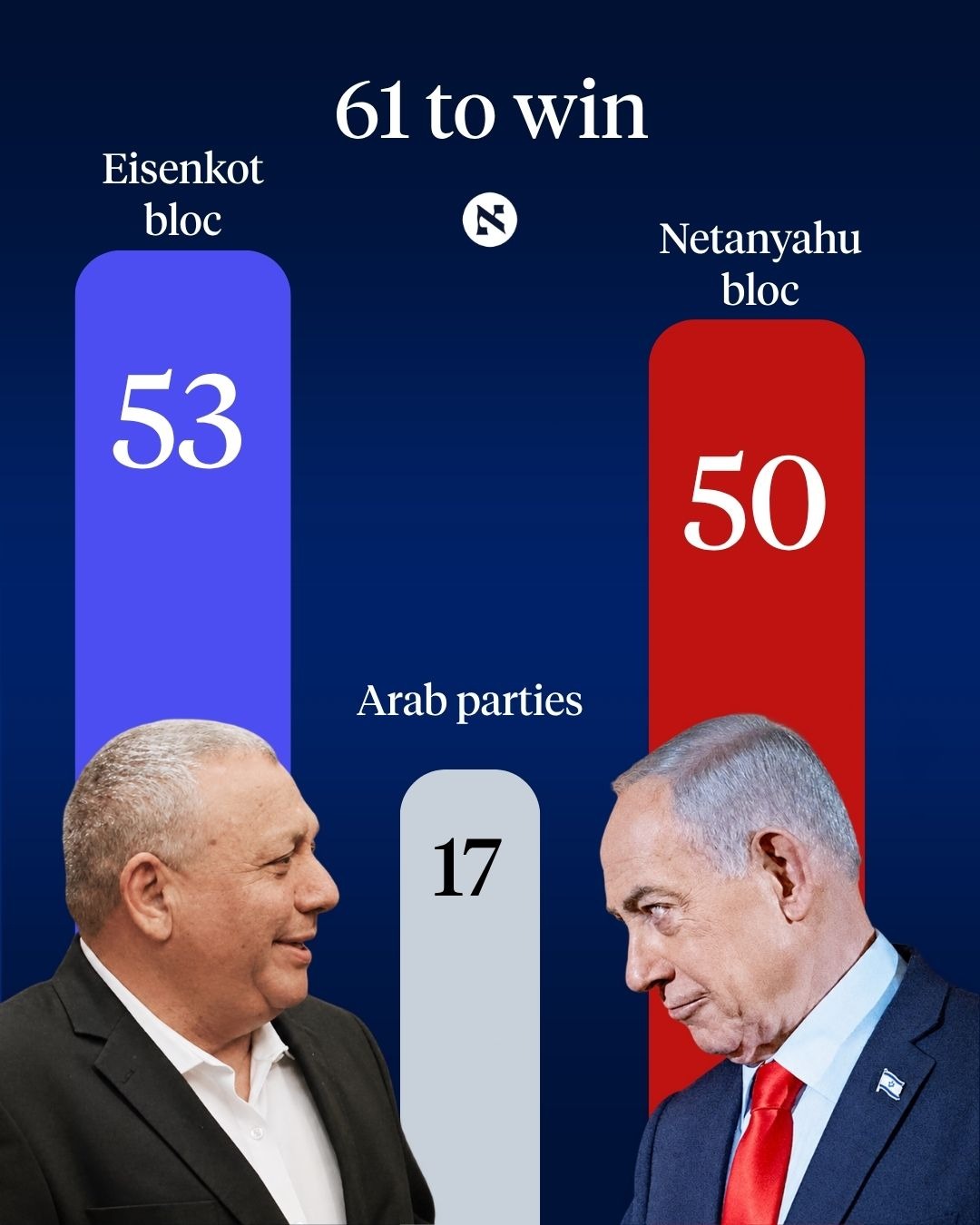
Likud remains the largest party but has lost about a quarter of its seats; it won 32 seats in the 2022 election. The opposition bloc also includes Avigdor Lieberman’s Yisrael Beytenu, which traditionally relies on Russian-speaking voters; according to Kan, it is projected to win eight seats. Turnout stood at 74.3% by 8 p.m., the highest level for that hour since 1988.
Opposition reaction
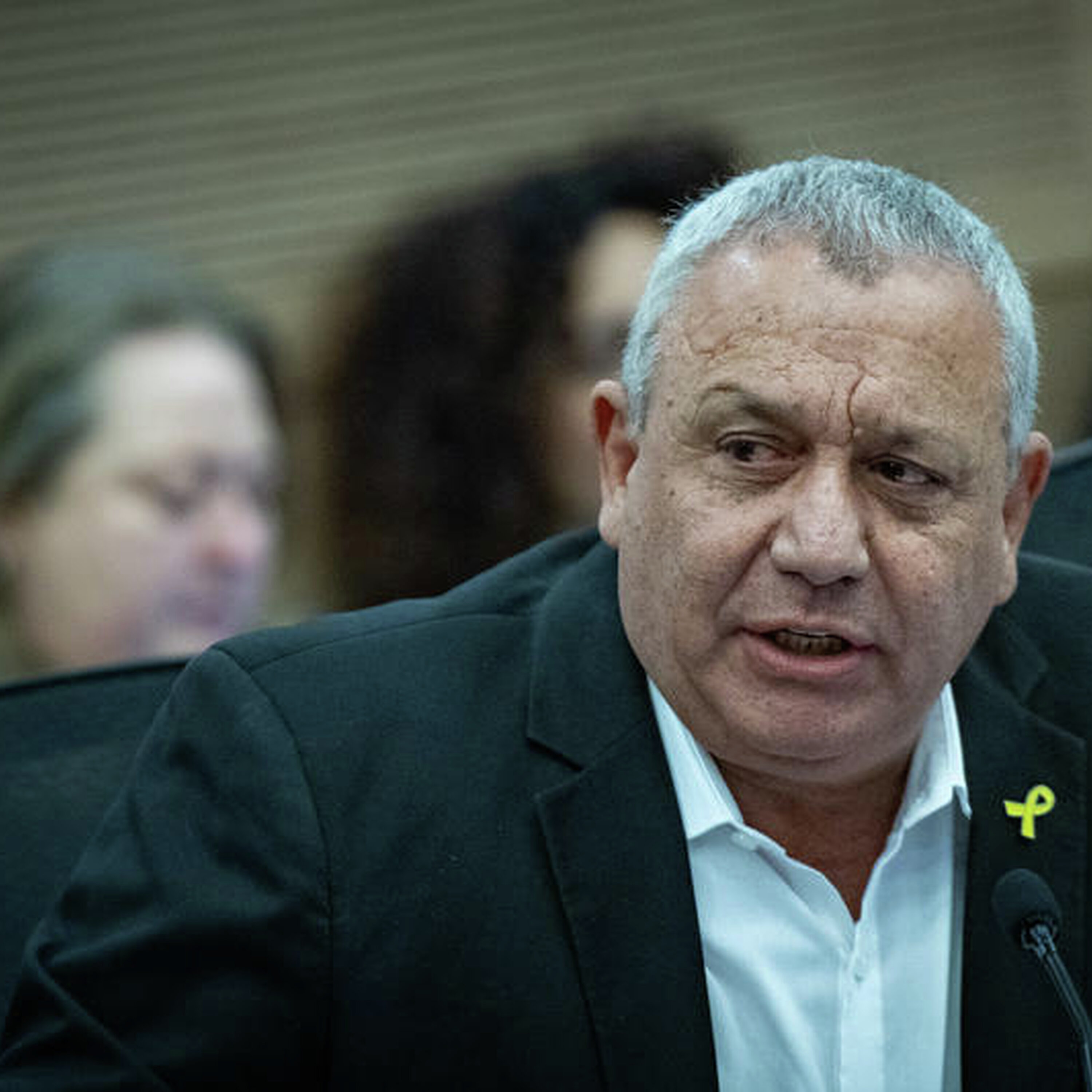
Eisenkot called the vote a rejection of Netanyahu and the “October 7 government” and pledged to form a “Zionist government” to replace it as soon as possible. Opposition leader Yair Lapid said Netanyahu had suffered a “crushing defeat.” Yair Golan, leader of the Democrats, wrote: “The people have spoken; they fired the Netanyahu government.”
Netanyahu’s call to the ultra-Orthodox
A few hours before polling stations closed, Channel 12 political commentator Amit Segal published a recording of a phone call between Netanyahu and a representative of the ultra-Orthodox community. “Tell me, have they gone crazy? Do they want a left-wing government here?” the prime minister asks as he tries to determine why Haredim are not voting. His interlocutor replies that after four years of unfulfilled promises on military conscription, the Haredim “do not believe that anyone will keep their word.” “How can I give them guarantees now, with an hour and a half left?” Netanyahu responds.
Throughout the day, the prime minister warned of a “Mansour Abbas and Ahmad Tibi government,” addressing his supporters amid high turnout in Arab communities.
Arab parties post record result
The United List and the United Arab List are projected to win 17–18 seats combined, the largest representation for Arab parties in the history of the Knesset. Speaking to supporters on Channel 12, one of the Arab party leaders called for the resignation of the “extreme-right government of Netanyahu, Ben-Gvir and Smotrich,” describing it as a “government of blood,” and advocated a just peace based on the establishment of a Palestinian state within the 1967 borders. At the same time, around 391,000 Palestinians in occupied East Jerusalem were unable to vote: Israel considers them permanent residents rather than citizens.
The Central Elections Committee will announce the official results in the coming days. The President of Israel, Isaac Herzog, will then consult with the parties and task one of the candidates with forming a government. Netanyahu may remain head of the caretaker government during coalition negotiations.