Turkey's energy balance is gradually changing as Ankara expands its pool of oil and gas suppliers, increases LNG purchases and boosts domestic production. Despite this diversification, Russia continues to hold an important position in Turkey's energy market.
The most visible changes have occurred in the oil market. An analysis published on September 12 found that the United States became Turkey's largest supplier of crude oil in June 2026.
The United States strengthens its position in Turkey's oil market
Growing U.S. supplies have become part of Ankara's broader strategy to diversify imports.
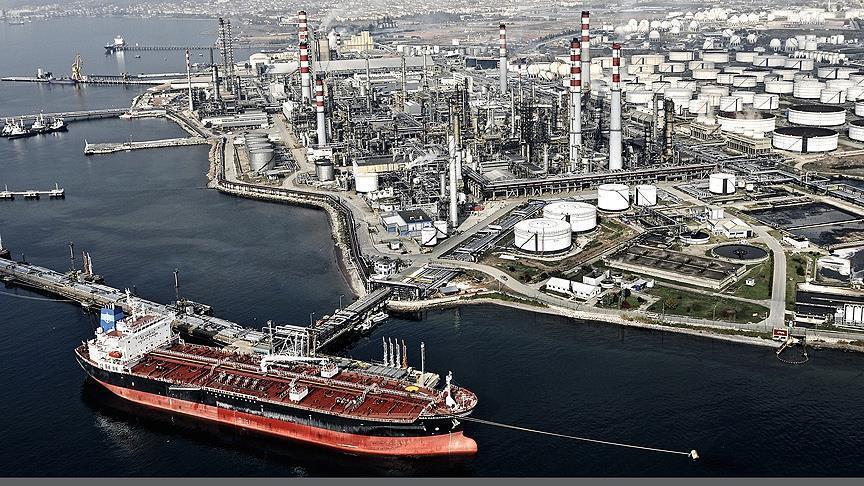
In recent years, Turkish refineries have expanded the geographical scope of their purchases, adding oil from the United States, Brazil, Guyana, Nigeria, Libya, Norway and other countries to their traditional supply sources.
It is still too early, however, to speak of Russia being fully pushed out of Turkey's oil market.
Data from Turkey's energy regulator EPDK show that when petroleum products are included alongside crude oil, Russia remained Turkey's largest supplier in June. It accounted for 37.8% of total imports, or about 1.52 million tons.
The United States ranked second, with approximately 570,700 tons and a 14.2% share, while Kazakhstan ranked third, with 464,000 tons and an 11.6% share.
U.S. supply growth therefore points more to the diversification of Turkey's energy market than to a complete abandonment of Russian resources.
Russian gas retains its importance
Changes in the gas market are taking place more slowly.
Russian natural gas continues to reach Turkey through two key routes: TurkStream and Blue Stream.
At the same time, Ankara is increasing gas purchases from Azerbaijan and expanding its capacity to import liquefied natural gas.
U.S. LNG has become particularly significant. The analysis found that the United States accounted for approximately 60% of Turkey's LNG imports in the first quarter of 2026.
Expanding alternative sources gives Ankara greater leverage in negotiations with suppliers. However, Russian gas continues to play an important role because of existing infrastructure and the substantial volume of supplies.
Turkey increases domestic production
Another element of Turkey's new energy strategy is the growth of domestic production.
The Sakarya gas field in the Black Sea is particularly important. Increasing production there is expected to gradually reduce Turkey's need for imported natural gas.
At the same time, the country is developing oil production in the Gabar area, renewable energy sources, LNG terminals and gas storage facilities.
Ankara's goal is not so much to replace one supplier with another as to create a system in which Turkey can choose among a larger number of energy sources.
Akkuyu keeps Russia in Turkey's energy system
Against the backdrop of changes in the oil and gas markets, the Akkuyu nuclear power plant, under construction in Mersin province, occupies a special place.
The project is worth more than $20 billion. It is being implemented by the Russian state corporation Rosatom under a Build-Own-Operate model.
Once its units enter operation, the plant is expected to reduce Turkey's need to use gas and coal for electricity generation.
At the same time, Akkuyu is creating a long-term energy link between Moscow and Ankara: Russia is involved in financing the project, provides the technology and nuclear fuel, and retains a key role in operating the plant.
Not a break with Russia, but diversification
Turkey's current energy policy shows that Ankara aims to reduce its dependence on individual suppliers without ending cooperation with Russia.
Changes are occurring faster in the oil market: the number of alternative suppliers is growing, and U.S. oil is taking an increasingly prominent position.
Russia's position remains considerably stronger in the gas sector because of its pipeline infrastructure and the scale of its supplies.
At the same time, the Akkuyu nuclear power project means that Russian-Turkish energy cooperation in the coming years will extend beyond oil and natural gas to include nuclear power.
As a result, Turkey is gradually moving from dependence on individual sources toward a more diversified model, seeking both to improve its energy security and strengthen its position in negotiations with suppliers.