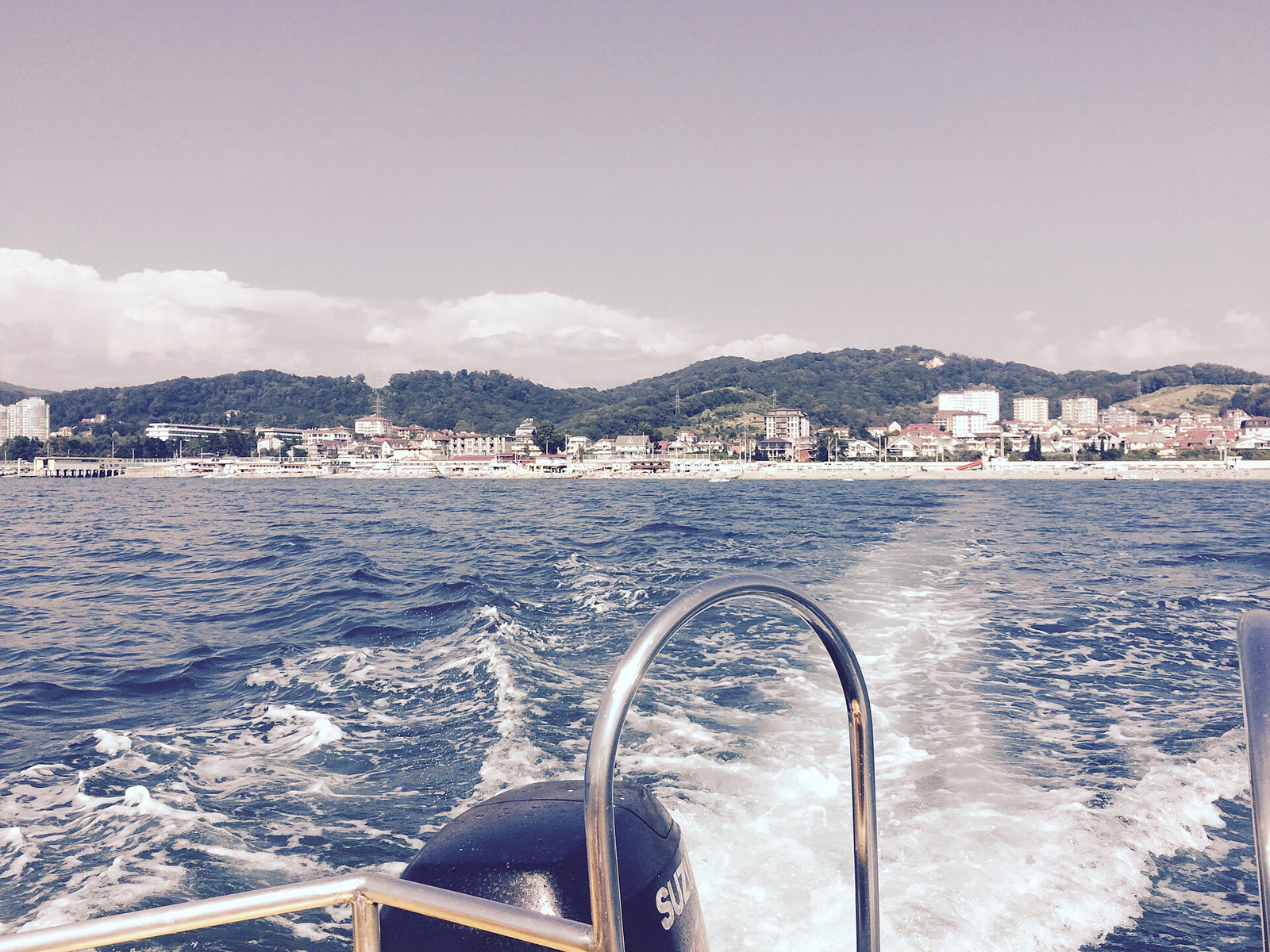
Beaches in Russia’s Black Sea city of Sochi, which were closed after an oil tanker was attacked offshore, reopened on Thursday. The city administration said seawater samples met health standards.
Satellite observations showed no oil spill on the surface of the sea. Inspections in the neighboring Sirius federal territory also found no traces of oil in the seawater, while air pollution levels remained within permitted limits.
Greenpeace, however, said on Oct. 9 that, based on Planet Labs satellite imagery, the oil slick off Sochi had grown from 8 to 25 square kilometers in three days. According to the environmental group, the slick stretches along the route of the drifting tanker, contradicting the official test results.
All 23 crew members rescued from fire
The Liberia-flagged Aframax Rio caught fire after a drone attack offshore on the evening of October 6. Russia’s Transport Ministry said burning oil prevented rescue vessels from approaching the tanker.
The fire was extinguished on Wednesday, and all 23 Indian crew members aboard the vessel were rescued. The amount of oil on the tanker was not disclosed.
Executive Ship Management, the tanker’s operator, announced that it had launched an effort with officials and two senior crew members to assess the vessel’s condition as it continued drifting along the coast after the fire.
The tanker was reported near Lazarevskoye, about 50 kilometers from where the fire broke out, on Wednesday afternoon and off Tuapse on Thursday. Environmentalists said the vessel may be under tow toward Novorossiysk.
Aframax Rio’s sanctions connection
Built in 2004, the tanker is 247 meters long and 42 meters wide. The Aframax Rio’s carrying capacity was given as 107,100 metric tons.
Kyiv linked the vessel to the “shadow fleet” allegedly used by Russia to transport oil in an effort to evade sanctions and said the tanker was under Ukrainian sanctions. The Aframax Rio had also previously called at Russian Black Sea ports.