- BIST10011,722-2.89%
- USD49.42+0.06%
- EUR55.41+0.20%
- GOLD4,185.20+0.36%
- INTEREST37.00%-1.00
- BITCOIN81,530-0.73%
- October 16, 202612°
- BIST10011,722-2.89%
- USD49.42+0.06%
- EUR55.41+0.20%
- GOLD4,185.20+0.36%
- INTEREST37.00%-1.00
- BITCOIN81,530-0.73%
- October 16, 202612°
Moscow’s Parallel Ukrainian Court Sparks Controversy
The so-called public court established by Russia regarding claims about the Ukraine war has resurfaced amid controversy due to its members' criminal backgrounds and Kremlin ties.
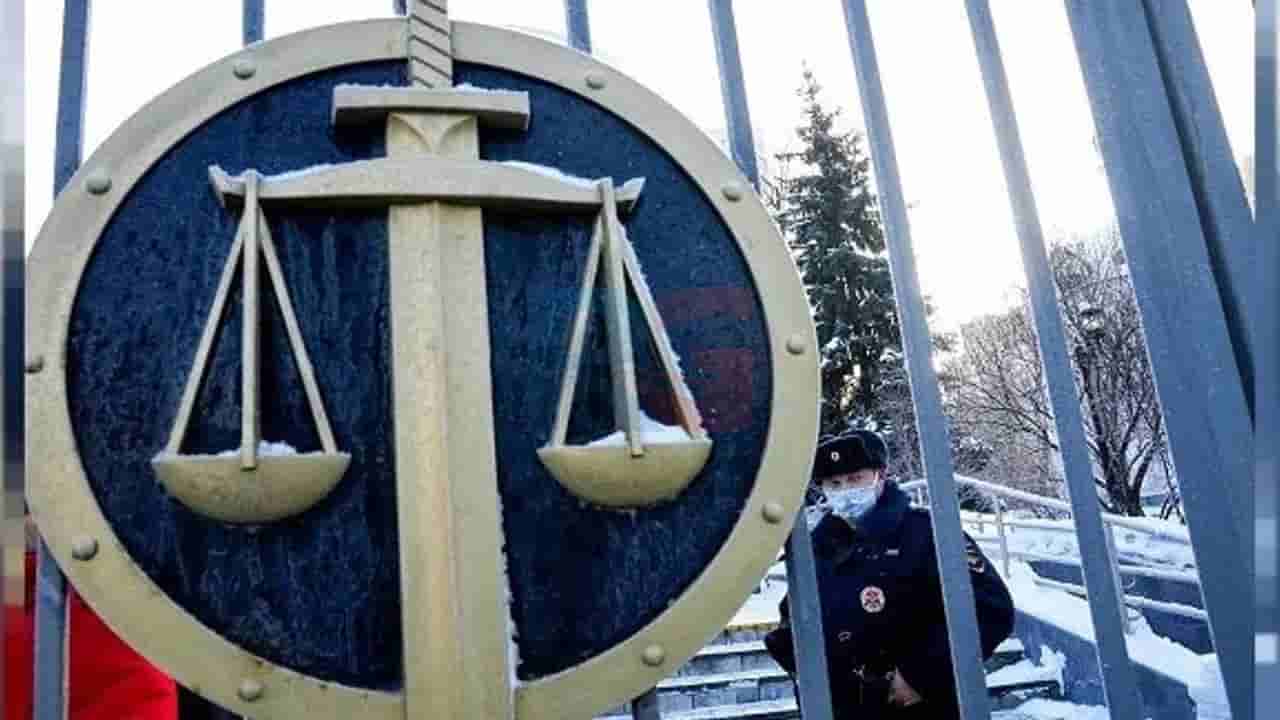
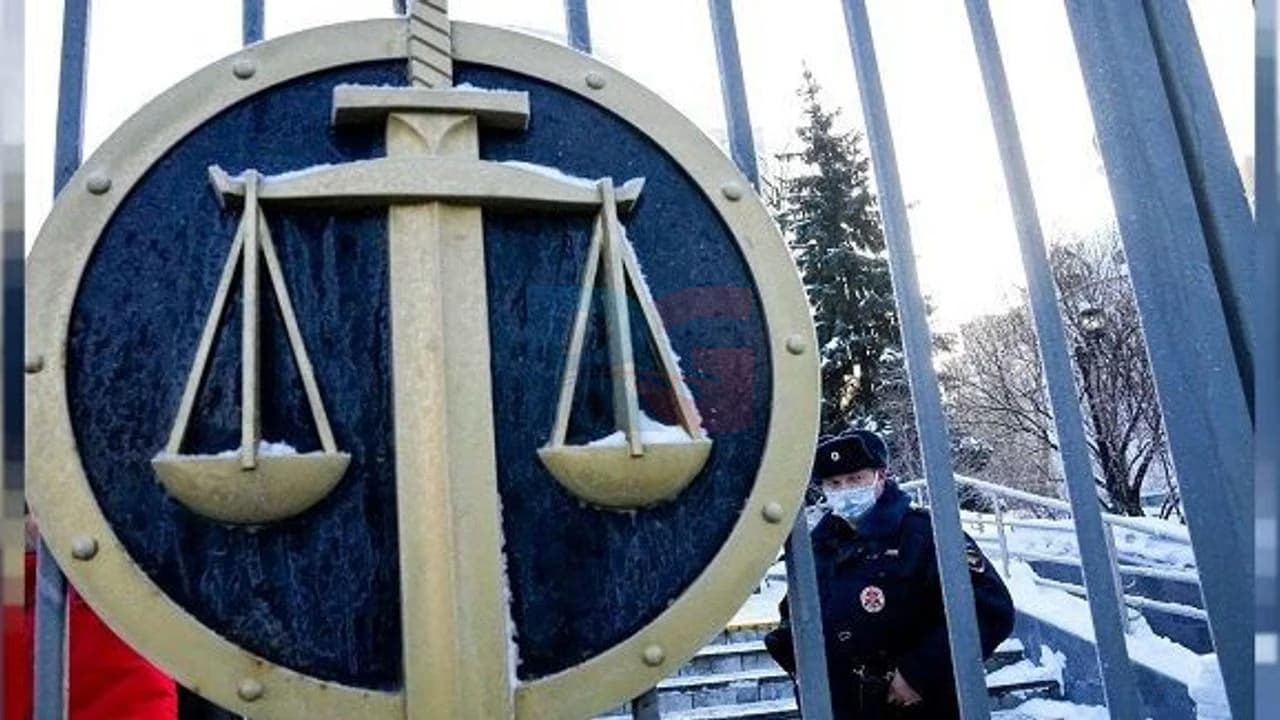
Russia’s so-called "international public court," created in response to the special tribunal expected to be established in The Hague to judge the crime of aggression against Ukraine, has sparked debate. Established under the Public Chamber, this body claims to document the alleged "crimes" of the Ukrainian army; however, serious doubts arise due to its personnel and working methods.
In mid-May, 36 countries and the European Union announced their intention to participate in establishing a special tribunal for the crime of aggression against Ukraine. This court is expected to begin operations in The Hague next year. Moscow responded with a counter-structure under its control, titled "Crimes of Ukrainian Neo-Nazis and Their Collaborators."
Established Immediately After the War Began
The structure was formed on March 1, 2022, just four days after Russia’s invasion of Ukraine began. The idea for its creation is attributed to Alexander Bastrykin, head of the Russian Investigative Committee. A source within the Public Chamber reported that some individuals were hastily summoned and presented with a ready-made framework without prior explanation.
Maxim Grigoryev, born in St. Petersburg, was appointed as the court’s president. Grigoryev is linked to election arrangements in St. Petersburg in the early 2000s and later moved to Moscow to lead the Democracy Problems Research Foundation, which received multi-million ruble funding from the state budget.
In 2022, Grigoryev reportedly received 8,780,680 rubles for a series of analytical programs about the special military operation, though no clear traces of these broadcasts have been found. He is also the author of propaganda books titled "Anti-Maidan," "White Helmets: Accomplices of Terrorists and Sources of Disinformation," "Crimes of the U.S.-Led Coalition in Syria," "History of Lithuania," and "Ukrainian Crimes Against Humanity."
In 2022, Grigoryev reportedly underwent close combat training and a one-month advanced course at the General Staff Academy, then assumed a journalist role to collect "evidence" in occupied Ukrainian territories. However, according to a Kremlin source, Grigoryev is mostly a figurehead, with the real work carried out by Denis Teleshev, with whom he has long collaborated.
Criminal Background and Field Network
Denis Teleshev, a key figure behind the court, also has a controversial past. In 1997, at age 19, he reportedly attacked a woman with a knife, stealing a tape recorder and bags, yet received only three years of probation.
Teleshev currently manages a volunteer network collecting witness statements from occupied regions. However, much of this testimony is seriously questionable, often based on accounts from people who have not left their homes and welcome the occupation, lacking documentary support and contradicting known facts.
Rodion Miroshnyk is responsible for oversight from the Russian Foreign Ministry side. Miroshnyk, former press secretary for fugitive ex-Ukrainian President Viktor Yanukovych, is known for calling his fellow citizens "Banderites" and claiming that the West actually supports Russia.
Miroshnyk is wanted in Ukraine on numerous charges and faces a 15-year prison sentence risk. Despite this, he has raised funds for groups named "Help Our People" and "Help Novorossiya," while his wife works at R1 TV, which produces Kremlin-aligned content.
Network of Relations Extends to Kremlin Propaganda
Phone records reportedly reveal Miroshnyk’s contacts with propagandists from NTV, Tsargrad, Komsomolskaya Pravda, Rossiya-24, Zvezda, REN TV, and Life.ru. The same records show frequent meetings with Yuriy Kot, who provides information support to MOTPUNIP.
Kot hosted a program in his language on Ukraine’s Inter channel in the 2000s, later switching sides to claim "everything was stolen from the Russians." He was one of the organizers of the 2014 Anti-Maidan movement in Kyiv and is wanted by Ukraine.
Kot reportedly lives in the "Resident Spies House" on Goncharnaya Street in Moscow, a residence for foreign intelligence generals. His family ties are detailed: his wife Alexandra Reshetnikova-Kot was previously married to intelligence officer Vadim Anishchik; they spied together in Italy. Alexandra’s father, General Leonid Reshetnikov, was a former SVR station chief in the Balkans.
Reshetnikov is said to have played an active role in the failed Montenegro coup attempt planned for October 2016, which was thwarted by authorities who prevented a plot by Serbian far-right extremists to storm parliament and assassinate the prime minister.
US Names Also on the List
The court’s staff reportedly includes Elena Chernykh-Branson from the US. The FBI has sought her, and she faces a 35-year prison risk in her country.
Chernykh-Branson married Princeton economist William Branson in 1991; he died unexpectedly in 2006. Their daughter Emily claimed he died deeply in debt. His only significant asset was an apartment overlooking Central Park, later sold for $1 million.
After Branson’s death, Chernykh-Branson founded the Russian Center in New York and became known for Kremlin-supporting rallies for Russian arrivals. She allegedly led the US branch of KSORS, linked to Russian intelligence. In 2020, the FBI searched her home, charging her with illegal lobbying, failure to register as a foreign agent, and involvement in issuing fake visas for Russian officials.
Following these events, she fled to Moscow. Two years later, her assistant Nomma Zarubina was arrested on charges of working for the Russian Federal Security Service. Besides Chernykh-Branson, US citizens John Dugan and Charles Bausman are also members of MOTPUNIP.
Dugan works as a deputy sheriff in Palm Beach, Florida, and faces 21 charges including robbery and illegal wiretapping. In Russia, he collaborates with the Geopolitical Expertise Center led by Valery Korovin, who is close to Russian far-right figure Alexander Dugin and connected to GRU officer Yury Khoroshenky.
Khoroshenky is described as a veteran of unit 29155, linked to the Skripal poisoning in Salisbury and sabotage operations across Europe. Despite these connections, Dugan reportedly struggles financially and circulates his resume in closed databases.
This situation highlights how Moscow’s counter-initiative to the international tribunal for judging aggression against Ukraine is heavily propaganda-driven. The difference between the special court planned in The Hague and the Kremlin’s own so-called court has already become a key point in the political struggle.
Stay Updated with RuskiGazeta
Subscribe to be informed about special news, developments and announcements. We will keep you informed.
By signing up, you agree to our Privacy Policy