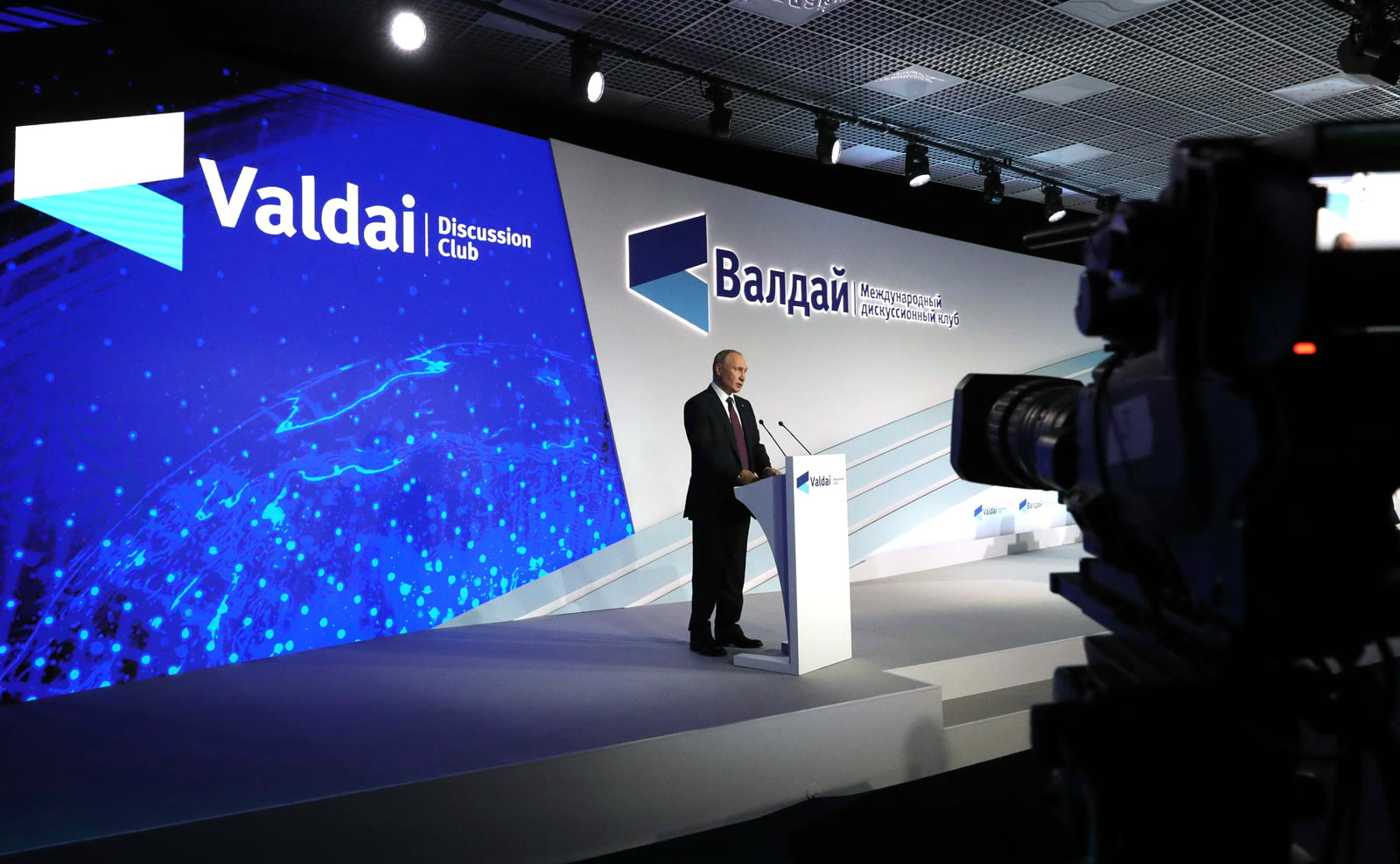
Russian President Vladimir Putin answered journalists’ questions after the plenary session of the 23rd annual meeting of the Valdai International Discussion Club. Speaking on a range of issues, from Iran’s nuclear program and European security to Russia’s relations with Asian countries and efforts to resolve the conflict in Ukraine, Putin assessed Moscow’s diplomatic and security priorities.
Russia’s proposal for Iran’s uranium
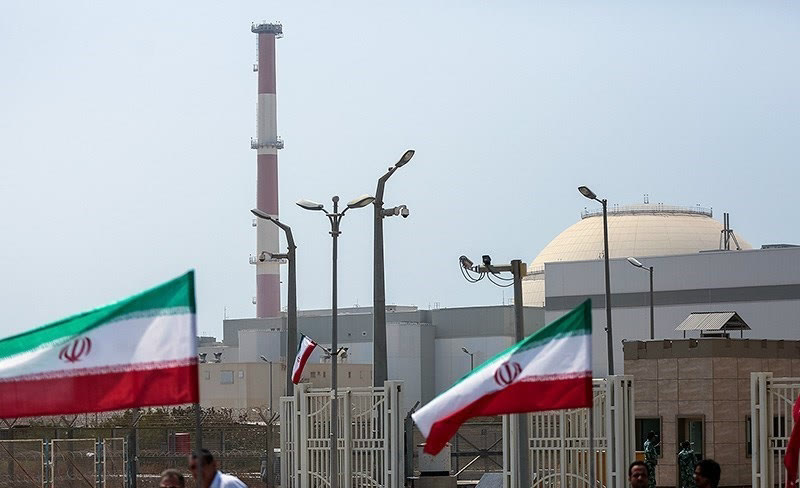
Addressing Iran’s nuclear program, Putin said Russia had played an important role in resolving the previous crisis and had contributed to the preparation of the Joint Comprehensive Plan of Action. He said the proposal to remove uranium enriched in Iran from the country and take it to Russia remained on the table.
According to Putin, Iran, the United States and Israel initially took a favorable position on the proposal. Washington later demanded that the uranium be sent only to the United States, after which Iran also toughened its position.
Putin said Russia supported resolving security problems in the region through peaceful means and expressed hope that the Strait of Hormuz would be reopened and sanctions imposed on Iran would be lifted.
Relations with Asian countries and sanctions
Responding to a question about Chinese President Xi Jinping’s Global Civilization Initiative, Putin said Moscow and Beijing shared common views on interaction among civilizations. He said Russia supported Xi’s initiative and that China respected Russia’s initiatives.
Putin said Russia and China could use the Northern Sea Route on the basis of mutual interests and noted that a trilateral meeting between Russia, the United States and China could be held on the sidelines of the Asia-Pacific Economic Cooperation summit. He said such a meeting would depend largely on China, the host of the summit, and added that the subject of the meeting should first be clarified.
Putin said Moscow’s approach to relations with Japan had not changed, while Tokyo’s position had changed, particularly after sanctions were imposed. Expressing concern about Japan’s militarization and the establishment of military-political blocs in areas close to Russia’s borders, Putin said cooperation between the two countries could advance in many areas if the existing problems were overcome.
Putin said they appreciated Serbia’s decision not to join sanctions against Moscow. He said Indian Prime Minister Narendra Modi had consistently raised the issue of resolving the conflict in Ukraine during their talks and thanked Modi for his ideas and efforts to find a solution. Putin said Russia and India continued joint projects, including in high-technology fields, and that the potential for cooperation was significant.
Nuclear risks and the United Nations
Responding to a question about extending the New Strategic Arms Reduction Treaty and reducing risks related to nuclear weapons, Putin said Russia was not the party that had withdrawn from international agreements. He said the United States had withdrawn from relevant agreements for various reasons, while Moscow was seeking to reestablish dialogue.
Putin said Russia possessed new weapons systems and that they were aware of the threats posed by nuclear weapons, adding that deterrence mechanisms supported by agreements were needed. He said Russia was ready to restart dialogue with the United States on the issue if there were mutual interests.
Putin said some aspects of the United Nations Security Council’s decision-making mechanisms had become outdated, but stressed that action should not be taken by bypassing the Council. He said the veto was created to prevent conflicts between major military powers from turning into direct confrontation and that decisions envisaging the use of armed force should be approved by the Security Council.
Putin said broader representation, including of India and African countries, was needed on the Security Council. He argued that Russia’s position on Yugoslavia had not been taken into account and that decisions had been made and acted upon outside the United Nations.
Relations with Europe and Palestine
Putin said they would view Europe as part of a future Eurasian partnership and that Russia was not setting preconditions for dialogue with Europe. He said Russia did not want the European Union to disintegrate and that Moscow aimed to establish cooperation with European countries.
Responding to claims that some European assets in Russia had been transferred to temporary management, Putin said Russia had not nationalized any assets. He said there were examples of Russian businesses, particularly companies in the oil and natural gas sectors, being seized in European countries, adding that European companies could regain their businesses if conditions developed appropriately.
Reiterating that a Palestinian state should be established, Putin said the United States acted in line with its own interests in its Middle East policy. He said the Israeli people should decide on Israel’s problems.
Ukraine’s neutrality and resolving the conflict
Putin answered in the affirmative when asked whether Ukraine’s neutral status remained among Russia’s objectives. He said Moscow had previously based its position on Ukraine’s neutral status, but argued that Kyiv later incorporated the goal of joining NATO into its constitution.
Putin said Russian forces continued to advance in the conflict zone, but that Russia nevertheless supported resolving the conflict through peaceful means. Assessing the Minsk agreements and the Istanbul talks, Putin alleged that Western countries had deceived Russia. He said the agreements had been nearly completed in Istanbul, but were later abandoned at the suggestion of Western partners.
Putin said Russia had accepted the proposals put forward by the United States during the Anchorage talks, but that the U.S. side later said it needed to consider them. Saying that approximately 11 percent of the Donetsk People’s Republic remained under Kyiv’s control, Putin argued that the area would come under Russian control earlier than expected.
Putin said the issue was not limited to territory and that people also had to be taken into account. He said it would be better to end the fighting if agreement could be reached on conditions acceptable to Russia. He also alleged that Kyiv and its Western partners did not want to end the conflict.
In his Valdai speech, Putin also called the situation in Gaza one of the most sensitive and urgent problems, saying Russia’s position on the Palestinian issue “is not subject to opportunistic considerations” and that the cornerstone of a settlement must be a full-fledged Palestinian state based on UN resolutions.