- BIST10011,722-2.89%
- USD49.45+0.05%
- EUR55.62+0.37%
- GOLD4,181.10+0.26%
- INTEREST37.00%-1.00
- BITCOIN81,467-0.04%
- October 17, 202612°
- BIST10011,722-2.89%
- USD49.45+0.05%
- EUR55.62+0.37%
- GOLD4,181.10+0.26%
- INTEREST37.00%-1.00
- BITCOIN81,467-0.04%
- October 17, 202612°
European leaders deliver unity message in Berlin before NATO summit
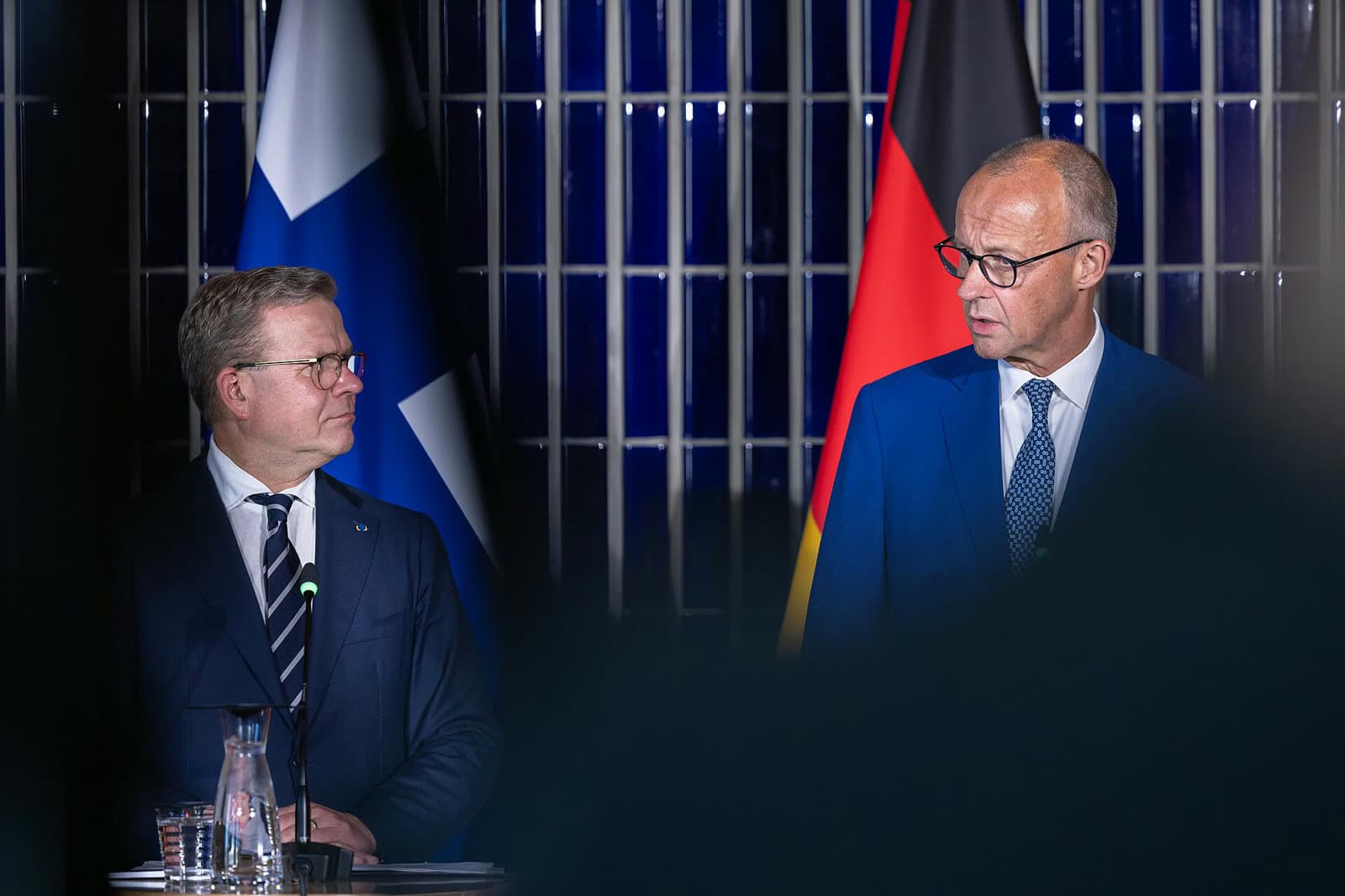
Hosted by German Chancellor Friedrich Merz, European leaders gathering in Berlin sent a message of unity and strengthening defense cooperation ahead of the NATO summit in Ankara. The leaders also bid farewell to British Prime Minister Keir Starmer, who announced his resignation.


German Chancellor Friedrich Merz hosted the leaders of Britain, France, Italy and Poland in Berlin. The meeting aimed to consolidate Europe's common stance on defense ahead of the NATO summit to be held in Ankara next month.
Merz said the July 7-8 NATO summit would be a moment for Europe to show its determination to take a stronger leadership role in defense. "We want to renew the alliance. We are strengthening the European pillar," Merz said, adding that the leaders made brief remarks before the dinner.
A joint statement affirmed an "unwavering commitment to Euro-Atlantic security and the transatlantic bond."
Tensions over defense projects
Behind the messages of unity lie tensions among European partners over defense and security issues. Berlin and Paris saw the long-delayed FCAS joint fighter jet project shelved due to strategic and management disagreements. This highlighted the difficulties in rebuilding Europe's defense at a time when U.S. President Donald Trump is increasingly distancing himself from NATO.
Washington has in recent months criticized the alliance for being reluctant to support the US-Israeli war against Iran and has threatened to reduce its troops in Europe.
Criticism of the E3 group
The E3 group, consisting of Germany, France and Britain, has also faced criticism from some European capitals, including Rome and Warsaw, for keeping other countries out of talks on Ukraine.
Merz, who earlier emphasized that the E3 arrangement aimed to enable Europe to act quickly, did not directly address the differences but stressed the goal of strengthening a common approach, including a strong partnership with the U.S. "We are walking this path together," Merz said, adding that "unilateral national actions would be a mistake in our defense policy."
Merz said he would speak with Trump and President Recep Tayyip Erdogan, as well as other partners, to brief them on Wednesday's talks.
Warm farewell to Starmer
The leaders gave a warm farewell to British Prime Minister Keir Starmer, who announced this week he would resign due to growing discontent within his party. Starmer had sought to strengthen ties with Europe following Britain's decision to leave the European Union a decade ago.
Polish Prime Minister Donald Tusk said to Starmer: "In many respects, we have become reunited. Thanks to your work, it was possible to forget Brexit for a moment. I will remember that for a long time."
Stay Updated with RuskiGazeta
Subscribe to be informed about special news, developments and announcements. We will keep you informed.
By signing up, you agree to our Privacy Policy