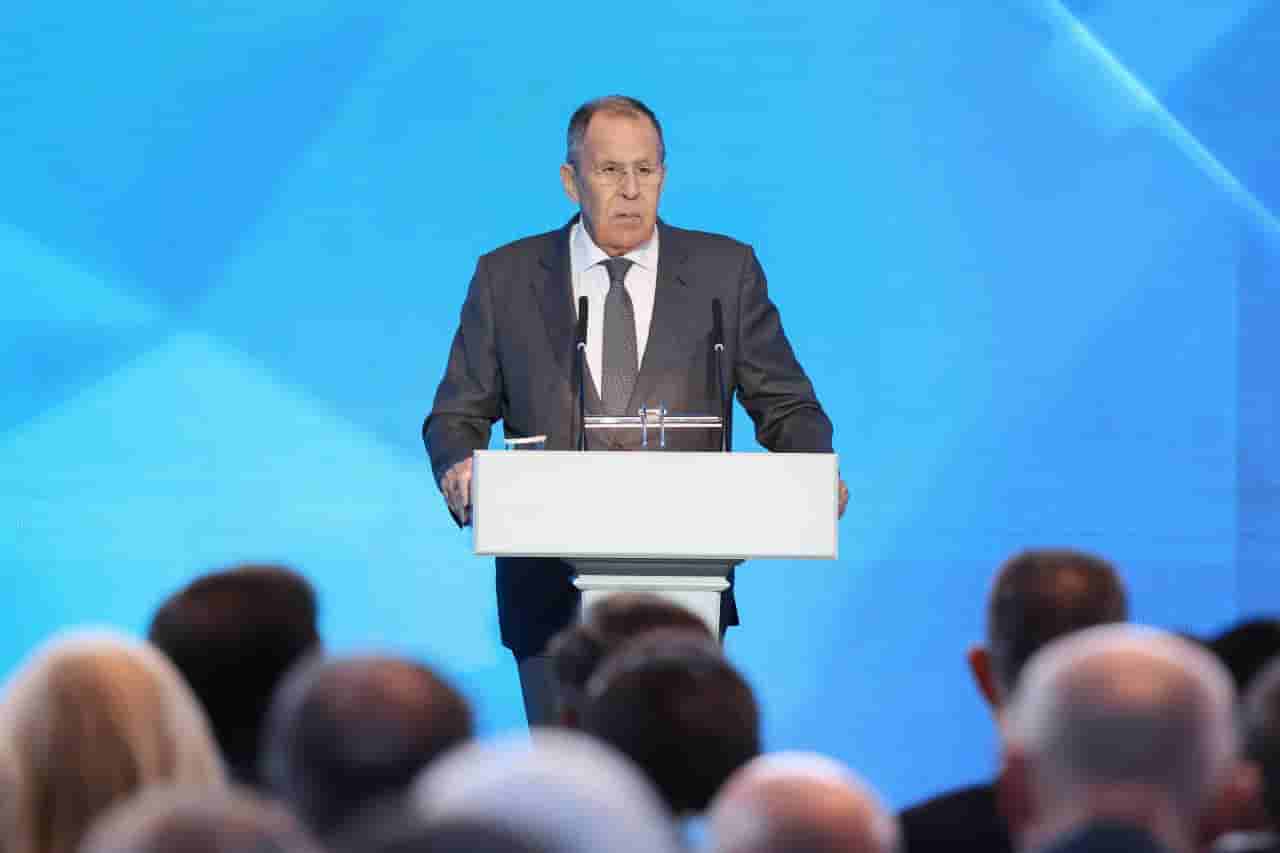
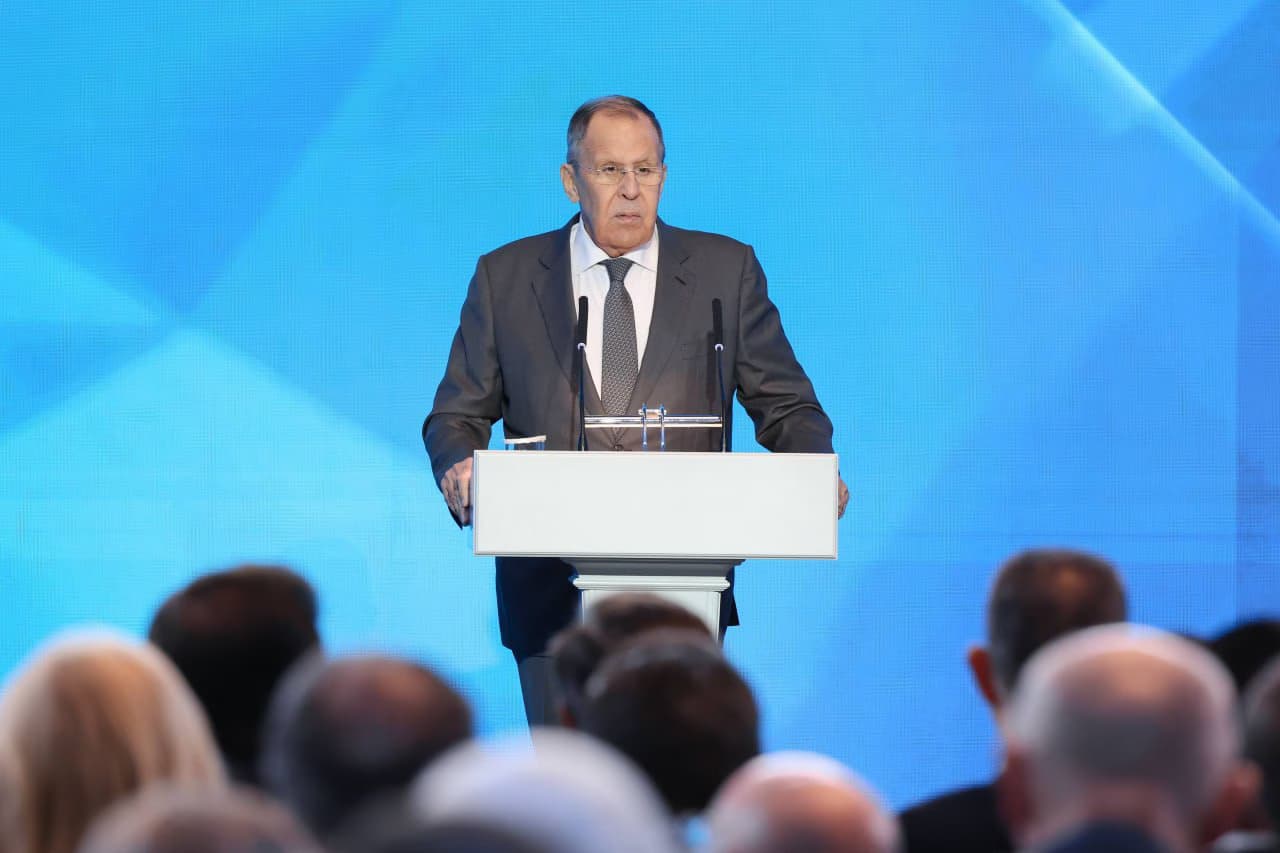
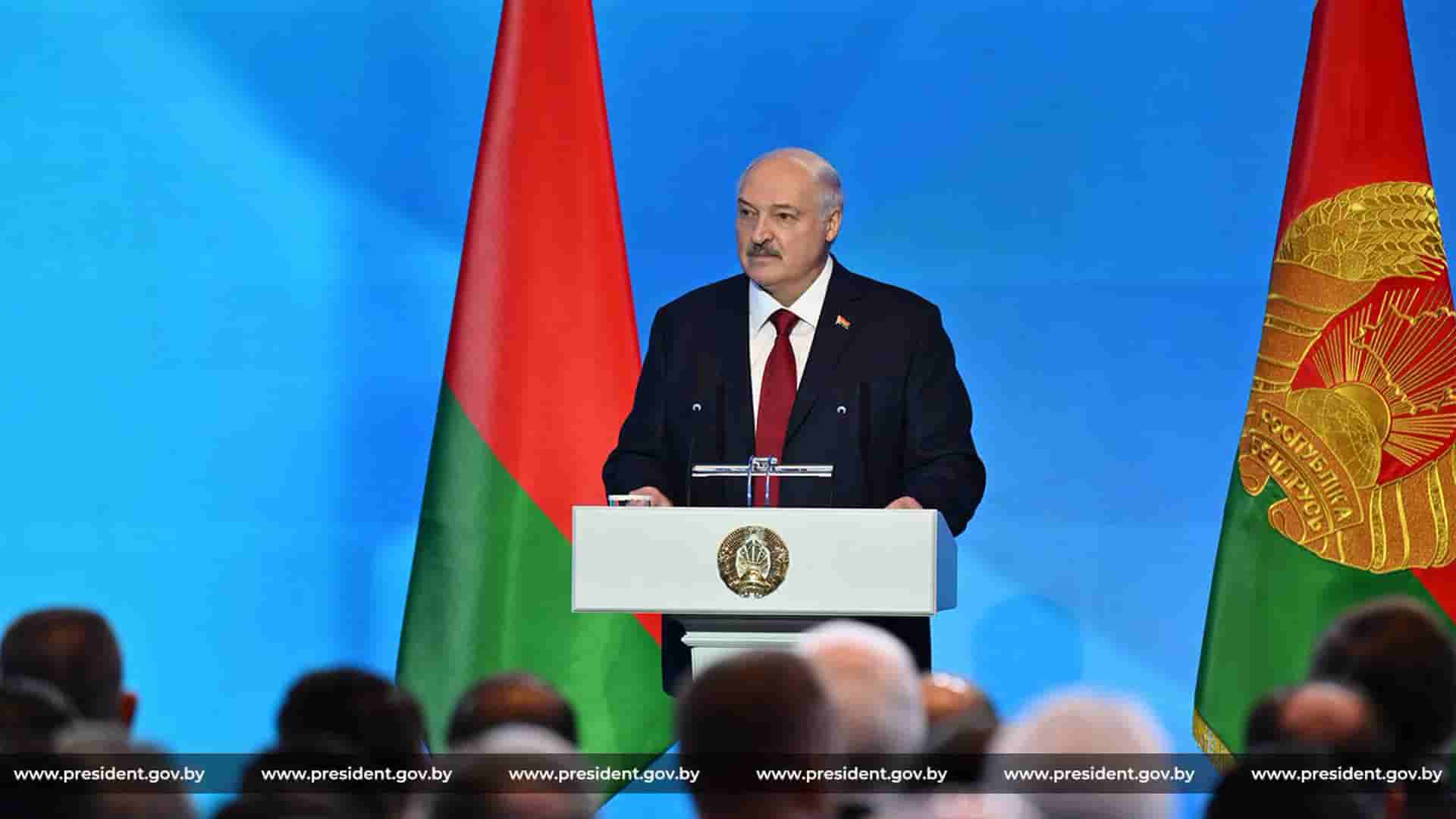
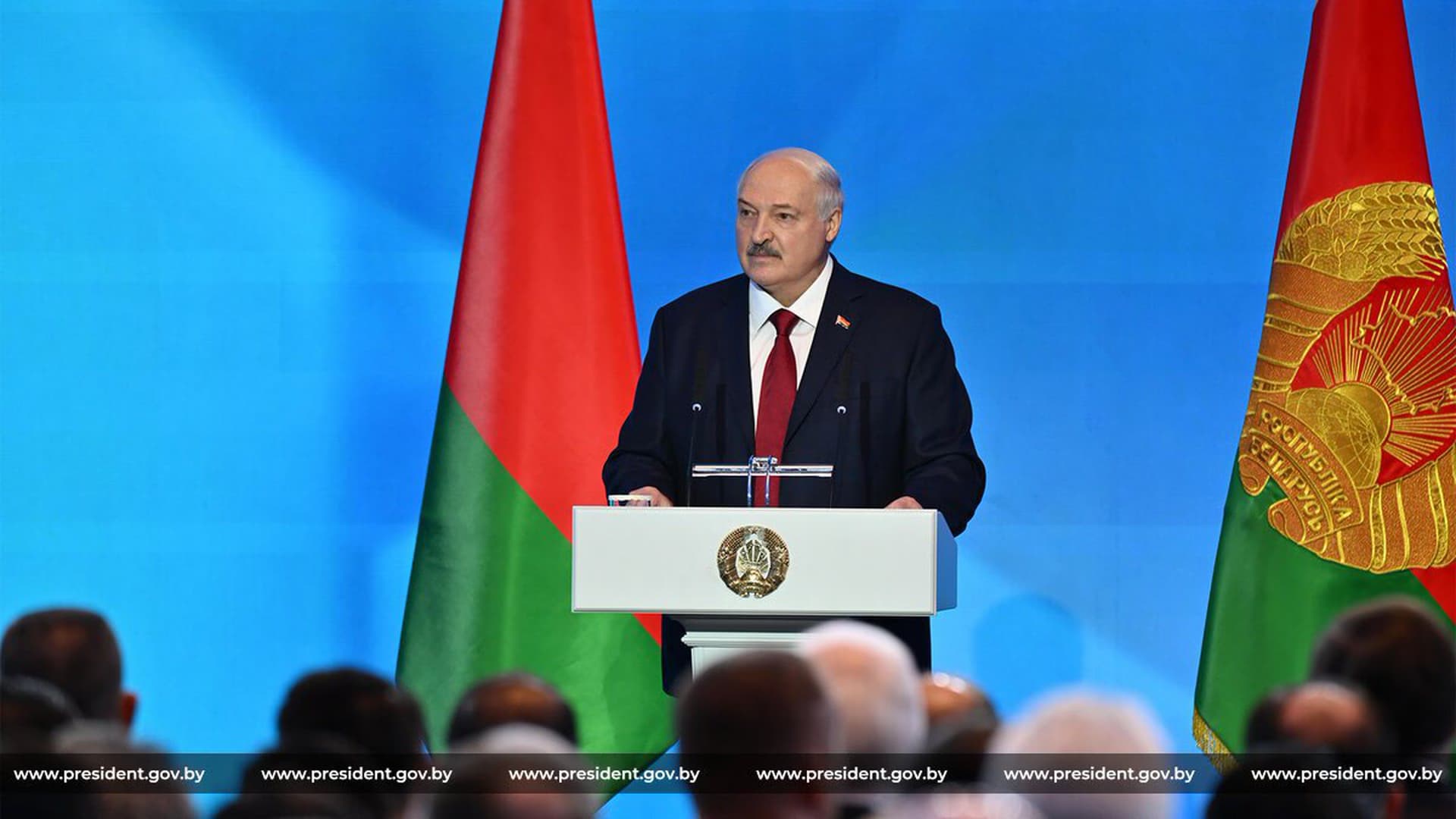
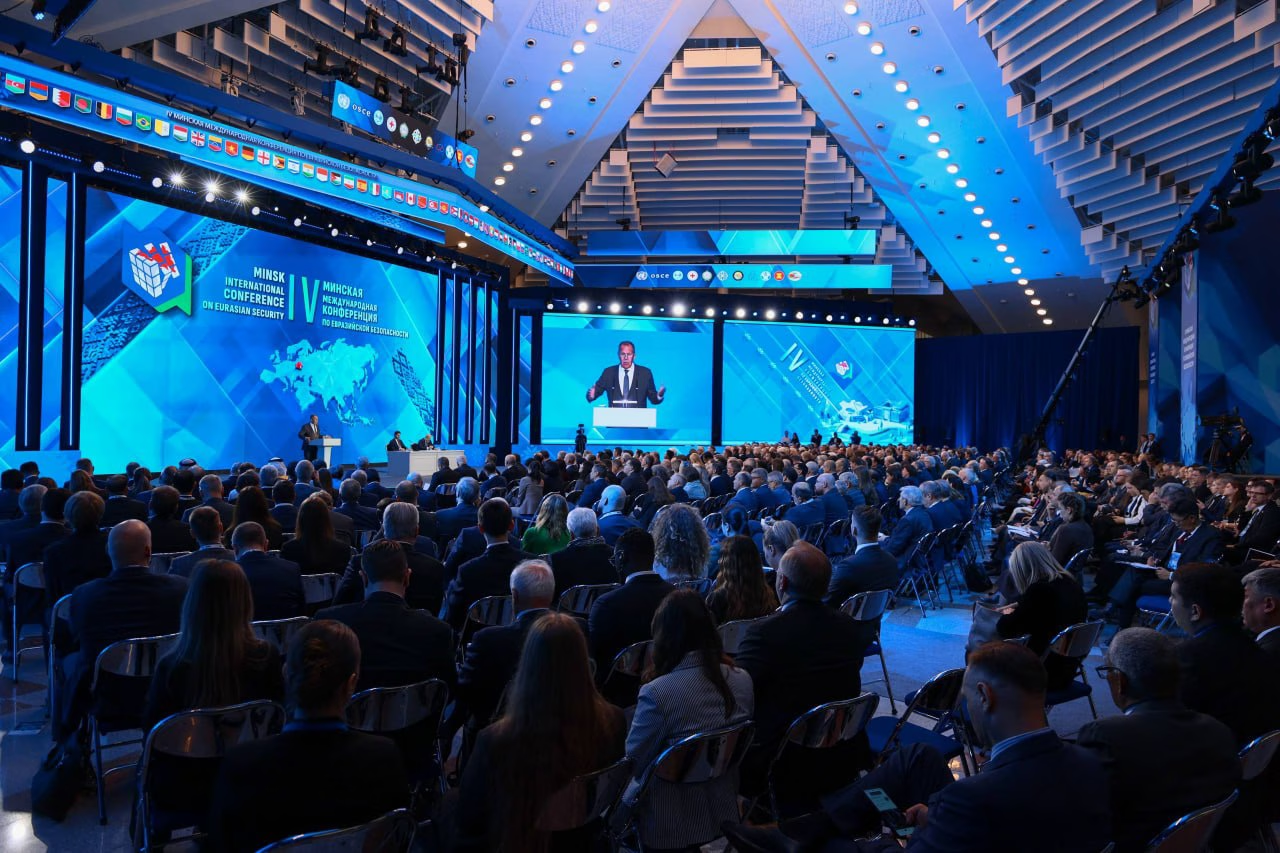
Russian Foreign Minister Sergey Lavrov addressed the high-level plenary session of the IV Minsk International Conference on Eurasian Security, held in the Belarusian capital on November 3–4. Organizers said the forum brought together more than 600 delegates from around 50 countries, including representatives of the Union State, the CSTO, the CIS and the SCO. Lavrov led the Russian delegation after arriving in Minsk on November 2.
Lavrov devoted a substantial part of his speech to the Ukrainian crisis. “They are calling for an immediate ceasefire and for agreements on an ‘energy,’ ‘food,’ ‘air’ and ‘maritime’ truce. None of this is for peace. We have become convinced of that many times,” he said. According to Lavrov, all these “laments” are aimed solely at giving Kyiv a respite to restore its combat potential with support from external sponsors. The minister stressed that Russia was calling not for a temporary ceasefire but for the reliable elimination of the root causes of the crisis.
“Stabilize what?”
Lavrov also criticized the idea of freezing the conflict along the line of contact, followed by Ukraine’s reconstruction and the deployment of international “stabilization forces” in the territory that remained under its control. He said the plan came from London and Paris and asked what exactly those forces intended to stabilize, calling the authorities in Kyiv an “openly Nazi regime.”
The OSCE is a “failure of the Euro-Atlantic model”
The minister recalled that the principle of the indivisibility of security was enshrined at the highest level at OSCE summits in Istanbul in 1999 and Astana in 2010: no country should strengthen its security at the expense of others, and no organization or group of states should seek dominance in the Euro-Atlantic region. Despite these guarantees, the West, led by NATO, began expanding eastward while openly declaring that its aim was to contain Russia.
“Is there a future for an organization whose history symbolizes the failure of the Euro-Atlantic security model? This model, rooted in the illusions of the late Cold War, requires a major overhaul if it wants to remain ‘afloat,’” Lavrov said. According to him, calls were coming from Brussels to build “European security” without Russia and Belarus and, “to be frank, against our two countries.” In response, Moscow proposes “the indivisibility of security within the framework of creating a pan-Eurasian rather than Euro-Atlantic architecture” that would be open to all countries on the continent.
“We will not impose ourselves on anyone”
Lavrov said the door was not closed to European countries: “We will not avoid engagement with those who renounce hostile intentions and are genuinely prepared to work toward a fair balance of interests.” At the same time, he added, Russians would not impose themselves on anyone as polite people, and as people who respect themselves, they would not chase after anyone. “For now, the prospect of realistic dialogue with Europe is not visible. Moreover, the West is moving against the objective historical trend toward multipolarity,” the minister said.
Lavrov said the West was also seeking to extend its influence into the eastern part of Eurasia. In Asia, he said, the creation of a NATO-style military-political bloc was being seriously discussed, and a name had already been proposed for it: the “Organization of the Indo-Pacific Treaty,” which he described as a copy of the North Atlantic Treaty Organization.
Eurasian charter and meeting with Sinirlioğlu
Answering journalists’ questions after the session, Lavrov said that following the three previous conferences, Russia and Belarus had prepared a draft document titled “Eurasian Charter of Diversity and Multipolarity in the 21st Century.” He also said the Americans “will not leave NATO,” but were gradually shifting their military presence eastward, and called on European leaders to answer to their citizens for the record increase in military spending. On the sidelines of the conference, Lavrov met with OSCE Secretary General Feridun Sinirlioğlu, Türkiye’s former foreign minister; the sides exchanged views on the situation within the organization.
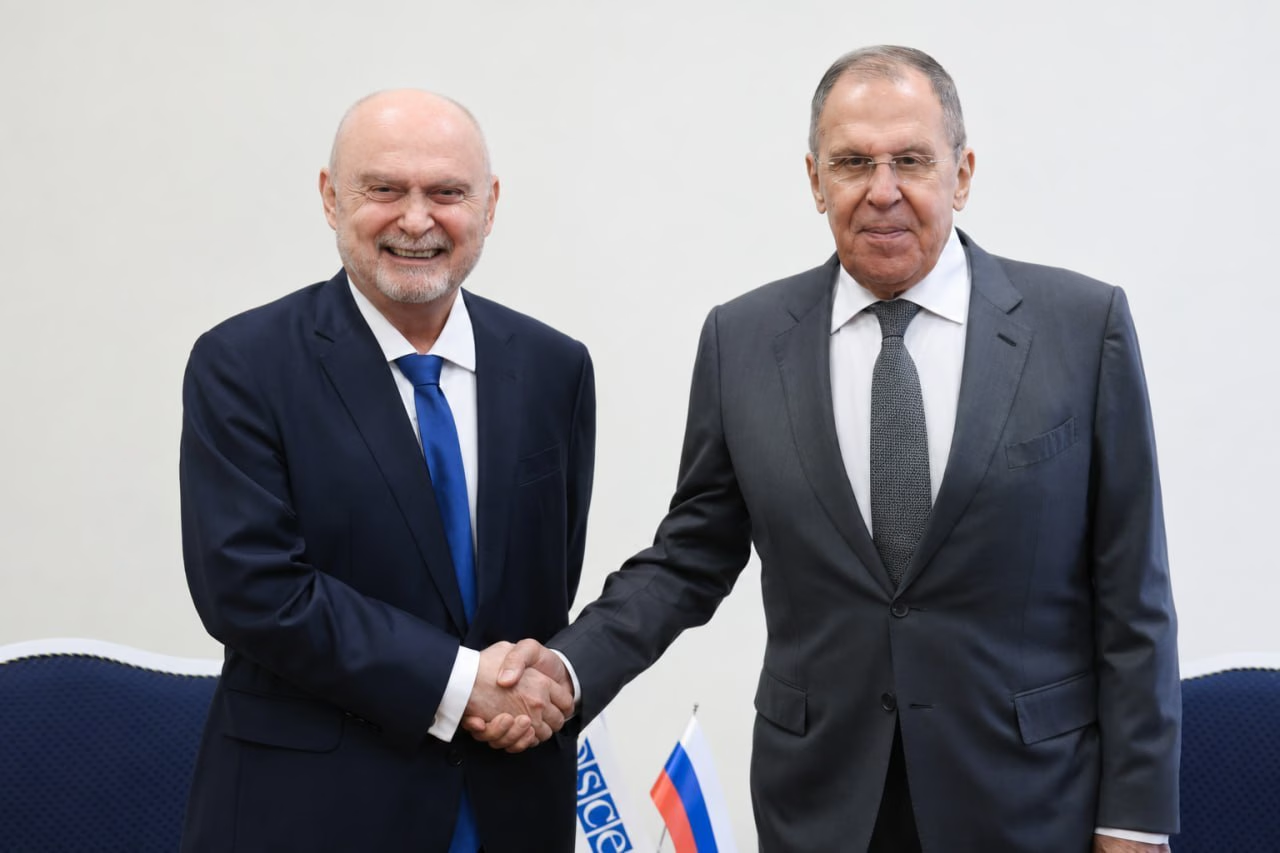
Photo: Russian Foreign Ministry. Video: social media